

Product profile
Editorially ResearchedGitHub Copilot
GitHub’s AI pair programmer for code completion, chat, and agent-style assistance across the editor, terminal, and GitHub itself.
GitHub Copilot
Fit
Quick verdict
Best for
Engineering teams that want AI coding assistance integrated with GitHub and mainstream IDEs at individual or enterprise scale, especially organizations that already standardize on GitHub for source control.
Not ideal for
Non-developers, or teams that prohibit cloud AI coding tools for policy reasons without an approved enterprise configuration.
Primary strength
Broad IDE support and deep GitHub ecosystem integration for mainstream engineering organizations, plus a multi-agent desktop app and CLI that share one runtime.
Primary limitation
Suggestions require careful review; enterprise value depends on policy configuration, seat management, AI credit budgeting, and code quality practices.
Profile
Overview
GitHub Copilot is an AI coding assistant from GitHub that provides inline completions, chat, and increasingly agentic development help across VS Code, JetBrains, Visual Studio, Neovim, Eclipse, the CLI, GitHub.com, and the new Copilot desktop app.
What sets it apartThe mainstream AI pair programmer with wide IDE coverage and a multi-agent desktop app, CLI, and SDK that all share one runtime.
Quick Verdict
GitHub Copilot in July 2026 is no longer just “autocomplete in VS Code.” It’s a multi-surface AI coding platform with a new desktop app, a redesigned CLI, a cloud agent that turns GitHub issues into pull requests, code review that runs on every PR, and a model picker that spans Claude, GPT, Gemini, Grok, and Kimi. Free still works for dabbling. Power users now have Pro ($10), Pro+ ($39) with premium models like Opus, and Max ($100) for high-volume agent work. Teams get Business ($19/seat) or Enterprise ($39/seat) with pooled AI credits, policy controls, and IP indemnity.
The honest takeaway: if your team already lives on GitHub, Copilot is the lowest-friction way to add AI to the whole development lifecycle. If you want an editor-first agent experience, look at Cursor. If you want a terminal-first agent, look at Claude Code or Devin. Copilot’s edge is distribution plus the new Copilot app that finally gives agents a real home.
What GitHub Copilot Is (and Isn’t) in 2026
GitHub Copilot is an AI pair programmer that runs inside the tools you already use. It started in 2021 as a completion engine inside VS Code. In 2026 it spans five surfaces:
- The IDE. Inline suggestions, next-edit suggestions across files, chat panels, and agent mode that can plan, edit, run tests, and iterate. Supported in VS Code, Visual Studio, JetBrains, Neovim, Eclipse, Xcode, Zed, and SQL Server Management Studio.
- GitHub.com and GitHub Mobile. Chat on repositories, pull request summaries, Copilot code review, and the new cloud agent that picks up an issue and opens a draft PR.
- The Copilot CLI. A terminal agent with a redesigned TUI, voice input, scheduled tasks via
/every, parallel work via/fleet, a/researchresearch mode, and a rubber-duck critic that runs a different model against your plan. - The GitHub Copilot app. A desktop workspace introduced at Microsoft Build 2026. Each agent session runs in its own git worktree, canvases are shared surfaces where humans and agents operate together, and you can run multiple agents in parallel from a single My Work view.
- The Copilot SDK. A Node.js/TypeScript, Python, Go, .NET, Rust, and Java SDK in general availability that exposes the same runtime the Copilot app uses, so internal tools and third-party apps can build on the same agent foundation.
What it is not: a replacement for senior engineering judgment, an architecture review, or a security audit. GitHub’s own docs say Copilot is a “copilot, not autopilot,” and the same caveat applies in 2026 — with more agents in the loop.
“The product is called Copilot not Autopilot and it’s not intended to generate code without oversight.” — GitHub Copilot FAQ
Who Should Use GitHub Copilot in 2026
You probably want GitHub Copilot if any of these sound like you:
- You live in VS Code, JetBrains, or Visual Studio and want AI in the editor without changing your workflow.
- Your team standardizes on GitHub for source control, PRs, issues, and CI, and you want one vendor for platform and AI.
- You want a cloud agent that can pick up a backlog issue, write code, run checks, and open a PR you can review.
- You need enterprise controls: SAML SSO, audit logs, content exclusion, IP indemnity, MDM-managed settings, MCP allow lists, and FedRAMP-moderate model restrictions.
- You’re a student, teacher, or open-source maintainer and want Pro features for free (verified students get the Student plan; verified teachers and popular OSS maintainers can get free Pro).
You probably want something else if:
- You want an AI-native editor as your daily driver. Cursor is built around that.
- You want a terminal-first agent and you’re fine without GitHub-native PR workflows. Claude Code and Devin lean that way.
- Your codebase is sensitive enough that you can’t send prompts to a cloud model. Self-hosted setups or strict data-residency requirements may push you toward BYOK models, fully local options, or GitHub Enterprise with data residency enabled.
Latest Models and 2026 Updates
July 2026 has been one of the busiest model months in Copilot’s history. From the GitHub Changelog:
- July 1, 2026 — Kimi K2.7 Code goes generally available in Copilot; Copilot vision is generally available; the Copilot CLI gets auto model selection that routes by task; enterprise managed-settings.json hits general availability; browser tools in VS Code go GA.
- July 7, 2026 — Codex is now an agent provider with agentic enhancements inside JetBrains IDEs.
- July 9, 2026 — OpenAI’s GPT-5.6 Sol, Terra, and Luna become available.
- July 21, 2026 — Google Gemini 3.6 Flash becomes available.
- July 23, 2026 — The Copilot cloud agent for Linear goes GA; GitHub MCP Server supports the next MCP specification.
- July 24, 2026 — Anthropic Claude Opus 5 lands in Copilot.
- July 28, 2026 — xAI Grok 4.5 lands in Copilot.
- July 29, 2026 — Copilot code review gets agent skills and MCP support in GA; default model enablement for Business and Enterprise ships.
The practical upshot is that you can mix and match frontier models for chat, agent mode, code review, and the cloud agent without leaving Copilot. Auto model selection picks cheaper models for routine tasks and reserves premium models for the hard ones, which matters once you’re on a credit-metered plan.
“On GitHub alone, commits nearly doubled year over year, crossing 1.4 billion per month, plus over 2 billion GitHub Actions minutes a week.” — Mario Rodriguez, GitHub, June 2, 2026
That kind of platform throughput is why GitHub is leaning into multi-agent experiences. The Copilot app, canvases, and the SDK all exist to make it normal for one developer to direct several agents at once.
Pricing Breakdown July 2026
Prices are per user per month in USD, pulled directly from github.com/features/copilot/plans on July 31, 2026. AI Credits are metered at $0.01 per credit.
| Plan | Price (USD) | AI Credits/mo | Code completions | Cloud agent | Premium models | Admin controls | Best for |
|---|---|---|---|---|---|---|---|
| Free | $0 | Limited | 2,000/month | Limited | No (auto model only) | No | Tinkerers, students, hobbyists |
| Pro | $10 | $15 worth (1,500) | Unlimited | Yes | No (Pro-tier catalog) | No | Individual developers |
| Pro+ | $39 | $70 worth (7,000) | Unlimited | Yes | Yes (incl. Opus 5) | No | AI power users, indie devs |
| Max | $100 | $200 worth (20,000) | Unlimited | Yes, priority | Yes, priority access | No | High-volume agent workflows |
| Business | $19/seat | Pooled | Unlimited | Yes | Broad model catalog | Yes + IP indemnity + governance | Teams that need pooled credits |
| Enterprise | $39/seat | 2× Business pool | Unlimited | Yes | Yes, priority | Yes + MDM + SAML SSO | Org-wide rollout |
Notes from the official pricing page:
- One AI credit equals $0.01 USD. When you hit your allowance, you can set a paid usage budget or wait for the cycle to reset.
- Code completions and next-edit suggestions stay unlimited on every paid plan.
- Flex allotments vary over time as GitHub adjusts inclusion amounts.
- Starting April 22, 2026, new self-serve sign-ups for Copilot Business for orgs on GitHub Free and Team plans are temporarily paused; you go through sales.
- Verified students get the Student plan, which mirrors Pro but requires a one-time verification.
GitHub Copilot vs Alternatives
Here’s the comparison developers ask me for most often. Prices are public list prices as of July 31, 2026.
| Tool | Best for | Free tier | Cheapest paid | Editor focus | Cloud agent | Notable 2026 trait |
|---|---|---|---|---|---|---|
| GitHub Copilot | GitHub-native teams and enterprises | $0 (2,000 completions) | $10/mo (Pro) | IDE + CLI + desktop app + GitHub.com | Yes, on github.com | Multi-agent desktop app, AI Credits, Gartner Leader 2 years running |
| Cursor | Editor-first agent experience | $0 (Hobby) | $20/mo (Pro) | Fork of VS Code | Cloud agents | Bugbot on usage-based billing |
| Claude Code | Terminal-first agent with deep codebase reasoning | None for code | $17/mo (Pro, annual) or $20 monthly | Terminal + VS Code/JetBrains extensions | Web/iOS/Android via Claude app | Sub-agent orchestration across 10s-100s of parallel tasks |
| Devin (Cognition) | Autonomous background agents | $0 (light quota) | $20/mo (Pro) | Devin Desktop (formerly Windsurf) | Devin Cloud | Built on top of Windsurf; teams pay $40/seat on top of base |
| Cody (Sourcegraph) | Enterprise codebase search + chat | Trial only | Custom (Enterprise) | VS Code/JetBrains/VS/Web | No | Uses Sourcegraph search API for deep codebase context |
Where Copilot wins in 2026:
- It’s the only one of these that ships with native PR review, native cloud agents on github.com, native actions integration, and a desktop multi-agent workspace.
- Microsoft Build 2026 made the Copilot app generally available for Pro, Pro+, Business, and Enterprise. Cursor still wins on pure editor polish; Claude Code still wins on terminal-centric flows.
Where the alternatives pull ahead:
- Cursor’s editor feels more opinionated for AI-native work. If you live in your editor, the difference is real.
- Claude Code’s terminal UX is genuinely better if you spend your day in tmux or SSH sessions.
- Devin’s background agents are compelling if your bottleneck is asynchronous work rather than interactive coding.
- Cody’s edge is when your codebase is so large that Sourcegraph’s search gives the model context Cursor and Copilot can’t.
Real-World Use Cases
These are the patterns I’m seeing work in 2026:
- Backlog triage with the cloud agent. Point Copilot at a backlog issue. It opens a draft PR with code, tests, and a summary. You review the diff, push back, and merge. GitHub cites Avanade’s Forward Deployed Engineers using the Copilot app to “dispatch a cohort of agents and manage multiple initiatives, all from one location.”
- Inline completion as a habit. Free and Pro users still get the most daily value from inline completions. JavaScript, TypeScript, and Python are best supported; less common languages still work but quality varies.
- PR review at scale. Copilot code review runs on every PR. Admin-set guidelines route low-risk repos to lighter models and high-risk repos to medium-tier reasoning models. The /security-review and /rubberduck skills are now generally available, and MCP servers extend what the reviewer can see.
- Terminal-first development. Copilot CLI pairs well with
/fleetfor parallel subtasks and/researchfor exploration. Voice input stays on-device. - Legacy code modernization. Cassidy Williams published a July 2026 walkthrough on using stacked sessions and pull requests in the Copilot app to modernize an old codebase, which is the kind of multi-week refactor that benefits from running several agents in parallel.
- Documentation automation. The Aspire team’s GitHub Agentic Workflows pipeline turns merged product changes into SME-reviewed documentation pull requests, closing the release-to-docs gap without humans hand-writing pages.
Customer data GitHub publishes to back these patterns:
- Grupo Boticário reports a 94% increase in developer productivity with Copilot (GitHub customer story).
- Thomson Reuters reports 55% faster coding, a 39% improvement in build success rates, and 68% of developers reporting a positive experience (GitHub Copilot for Business page).
Limitations and Gotchas
A few things to know before you roll it out:
- Hallucinated code is still real. Copilot can suggest insecure or outdated APIs that look plausible. Use it like you’d use a junior dev’s PR — review, test, lint, scan.
- AI credit math. Pro includes $15 of credits per month, Pro+ includes $70, Max includes $200. Code completions are unlimited, but heavy agent sessions on frontier models will burn through credits. Set a paid-usage budget or you’ll get a surprise.
- Free tier is constrained. 2,000 completions and 50 chats per month is enough to evaluate, not enough to ship with.
- Data training is plan-dependent. Free, Pro, and Pro+ interactions may be used to train models unless you opt out at github.com/settings/copilot/features. Business and Enterprise data is never used for training.
- No Copilot for GitHub Enterprise Server. Copilot is cloud-only. If you’re on GHES, you currently don’t have a direct Copilot path.
- Availability isn’t 100%. The 90-day uptime for Copilot on GitHub’s status page sits around 99.93%, with Copilot AI Model Providers at 99.88%. The June 2026 availability report describes six incidents, including a 93.9% peak failure rate on Copilot code review during one botched dependency rollout on June 4 and a 54-minute outage of frontier chat models on June 17.
- IP risk is real but small. GitHub’s own research puts the rate of suggestions matching public training data under 1%. The public-code filter blocks those suggestions; with the filter on, Business and Enterprise customers get IP indemnity.
Privacy, Security, and Compliance
If you’re an enterprise buyer, this is the section that matters most. Pulled from GitHub’s docs and the Trust Center:
- Data retention. For Business and Enterprise, prompts and suggestions from IDE chat and completions are not retained by default; user engagement data is kept for two years; prompts and suggestions on github.com, mobile, and CLI are retained for 28 days to keep thread history working. Prompts and suggestions from Enterprise chats are not used to train models.
- GDPR and DPA. GitHub offers a Data Protection Agreement that supports GDPR compliance. EU data residency is available on GitHub Enterprise Cloud.
- IP indemnity. When the public-code filter is on, GitHub indemnifies Business and Enterprise customers for unmodified suggestions. Microsoft’s Copilot Copyright Commitment extends further.
- Authentication and SSO. SAML SSO is available on Business and Enterprise. Enterprise adds Enterprise Managed Users and SCIM provisioning.
- Model controls. Admins can pin a default model, restrict to FedRAMP-moderate certified models, or let auto model selection route per task. BYOK lets you use your own LLM provider with Azure Managed Identity or static API keys.
- Sandboxes. Cloud sandboxes run Copilot in isolated, ephemeral Linux environments hosted by GitHub. Local sandboxes run on the developer’s machine with restricted filesystem and network access.
- Audit and observability. Repository-level GitHub Copilot usage metrics hit general availability in July 2026, and the Copilot app emits usage through the GitHub usage metrics API. Enterprise-managed OpenTelemetry export from VS Code and CLI became available in early July 2026.
- MCP governance. Admins control which MCP servers developers can reach from their IDEs and can enforce allow lists. Enterprise plugin standards let central teams define which plugins are available.
- Compliance certifications. GitHub’s API is covered by ISO, SOC 2, and GDPR compliance.
Microsoft’s FY26 Q4 earnings press release (July 29, 2026) underlines the size of the bet behind all of this: Azure and other cloud services grew 43% year over year, and Microsoft 365 Copilot crossed 30 million paid seats.
FAQ
What is GitHub Copilot?
GitHub Copilot is GitHub’s AI coding assistant. It provides inline code suggestions, in-editor chat, agent mode that plans and edits code, and a cloud agent that turns GitHub issues into pull requests. It runs across VS Code, Visual Studio, JetBrains, Neovim, Eclipse, Xcode, the Copilot CLI, and GitHub.com.
How much does GitHub Copilot cost in July 2026?
Free is $0 with 2,000 completions and 50 chats per month. Pro is $10/user/month with $15 of AI Credits. Pro+ is $39/user/month with premium models and $70 of credits. Max is $100/month with $200 of credits. Business is $19/seat/month and Enterprise is $39/seat/month, both with pooled credits and admin controls.
Does GitHub Copilot train on my code?
For Copilot Business and Enterprise, GitHub does not use prompts, suggestions, or code snippets to train models, and prompts and suggestions from IDE chat and completions are not retained by default. For Copilot Free, Pro, and Pro+, GitHub may use interactions to train models unless you opt out at github.com/settings/copilot/features.
Is GitHub Copilot better than Cursor?
They optimize for different things. Copilot lives where your repo, PRs, and CI already live, and now has a multi-agent desktop app. Cursor wraps a VS Code-style editor around its own multi-file agent experience. Pick Copilot if GitHub is your platform; pick Cursor if you want an AI-native editor as your daily driver.
What models does GitHub Copilot support?
As of July 2026, Copilot supports Anthropic Claude (Haiku 4.5, Sonnet 4 through 5, Opus 4.5 through 5), OpenAI GPT-5 mini through GPT-5.6 (Sol, Terra, Luna) plus Codex variants, Google Gemini 2.5 Pro through Gemini 3.6 Flash, xAI Grok 4.5, Moonshot Kimi K2.7 Code, and GitHub’s own Raptor mini. Auto model selection routes by task.
What is the GitHub Copilot app?
The Copilot app is a desktop workspace introduced at Microsoft Build 2026. It runs multiple Copilot agents in parallel, each in its own git worktree, and lets you steer them through a My Work view. Canvases are shared surfaces where agents and humans plan, edit, and review together. It’s available to Pro, Pro+, Business, and Enterprise users.
Can GitHub Copilot review pull requests automatically?
Yes. Copilot code review runs on github.com and inside supported editors. It can route to medium-tier models for higher-risk repos, supports custom skills, MCP servers, and the /security-review and /rubberduck skills. From June 1, 2026, code review workflows also consume GitHub Actions minutes.
What are GitHub AI Credits?
GitHub AI Credits are how Copilot charges for premium requests. One credit equals $0.01 USD. Code completions and next-edit suggestions stay unlimited on every paid plan. Chat, agent mode, Copilot CLI, Spaces, Spark, and cloud agent work draw from your monthly allowance or paid usage.
Is GitHub Copilot safe for enterprises?
Copilot Business and Enterprise add SAML SSO, audit logs, content exclusion, policy controls, IP indemnity on unmodified suggestions when the public-code filter is on, MCP allow lists, and enterprise-managed settings via MDM and a settings.json rollout. They also support FedRAMP-moderate model restrictions and BYOK for customers who want to use their own LLM provider.
Which GitHub Copilot plan should I pick?
Start on Free, move to Pro once you hit the chat limit. Pick Pro+ if you need premium models like Opus. Pick Max if you burn through credits daily. Pick Business for pooled credits and admin controls; pick Enterprise for org-wide rollout, larger credit pools, and priority access.
Final Verdict
GitHub Copilot in July 2026 is the safe, mainstream, GitHub-native pick for AI coding assistance. The new Copilot app, the CLI rework, and the explosion of available models make it feel less like “autocomplete with a chat box” and more like a real platform for agent-driven development. The pricing is reasonable for individuals, competitive for teams, and the enterprise controls are mature.
What it isn’t: the most opinionated editor experience, the most terminal-native agent, or the cheapest heavy-agent setup. If you want those, Cursor, Claude Code, or Devin are the right comparisons.
My honest recommendation for July 2026:
- Individual developers: Start on Free. If you hit the chat cap, upgrade to Pro ($10). If you specifically want Opus or Sonnet for hard problems, jump straight to Pro+ ($39).
- Heavy individual users who run agents all day: Max ($100) is worth it once you’d otherwise be buying $100+ in pay-as-you-go credits anyway.
- Teams of any size: Business ($19/seat) for pooled credits, audit logs, and IP indemnity. Move to Enterprise ($39/seat) when you need SAML SSO, data residency, MDM-managed settings, and priority access to new models.
- If your editor is your world: Try Cursor before you commit.
- If your terminal is your world: Pair Copilot with Claude Code or Devin Desktop.
In every case, turn on the public-code filter, set a paid-usage budget so you don’t get surprised by AI credits, and review the diff. That’s the part that hasn’t changed since 2021.
Jobs to be done
Use cases
- 01Inline code completion and function generation
- 02IDE chat for explanation, refactoring, and test authoring
- 03Cloud agent that turns issues into pull requests
- 04Pull request and code review automation on GitHub
- 05Team standardized AI coding assistance under GitHub admin controls
- 06Terminal-first development with Copilot CLI
- 07Desktop multi-agent orchestration via the GitHub Copilot app
Capabilities
Features
Coding assistance
- Inline code suggestions
- Multi-line function and boilerplate generation
- Next edit suggestions across files
- Chat assistance in supported editors
- Agent mode that plans, edits, and validates
GitHub platform
- Copilot cloud agent that turns an issue into a PR
- Copilot code review on pull requests
- Copilot CLI with autopilot, fleet, and /research commands
- GitHub Copilot app desktop workspace for parallel agents
- Integration with GitHub Actions and Agentic Workflows
Models and plans
- Individual, business, and enterprise plan tiers
- Choice across Claude, GPT, Gemini, Grok, Kimi, and Raptor models
- Auto model selection for cost-aware routing
- GitHub AI Credits metered on premium requests
Tradeoffs
Strengths & limitations
Strengths
- Familiar path for teams already on GitHub
- Works across the major IDEs used by professional developers
- Strong organizational adoption story with admin, audit, and budget controls
- Free and low-cost entry points for individuals in many cases
- Native multi-agent orchestration through the Copilot app and CLI
- Gartner Leader in AI Code Assistants for two consecutive years
Limitations
- Can suggest insecure or incorrect code that looks plausible
- AI credit consumption on heavy workloads can add up beyond the included allowance
- Enterprise value depends on policy configuration and code review discipline
- Effectiveness varies by language, framework, and prompt context
- Not available on GitHub Enterprise Server (cloud only)
Evidence
Sources
- 01
- 02
Related
Related guides & workflows

Best ChatGPT Alternatives in 2026
The best ChatGPT alternatives in 2026 are Claude for general work, Perplexity for cited research, Notion AI for workspace knowledge, GitHub Copilot for GitHub-first coding, and Cursor for agent-led software development.

Best Cursor Alternatives in 2026
Hands-off editorials guide to the five Cursor alternatives we trust most in 2026 — GitHub Copilot, Windsurf (now Devin Desktop), Claude Code, Cody, and Tabnine — with verified 2026 pricing, model access, and where each one wins.
Best GitHub Copilot Alternatives
Looking beyond GitHub Copilot for AI coding help in 2026? These alternatives cover AI-native editors, terminal agents, and enterprise-grade IDE assistants — without fake rankings or invented scores.
Developer AI Coding Workflow
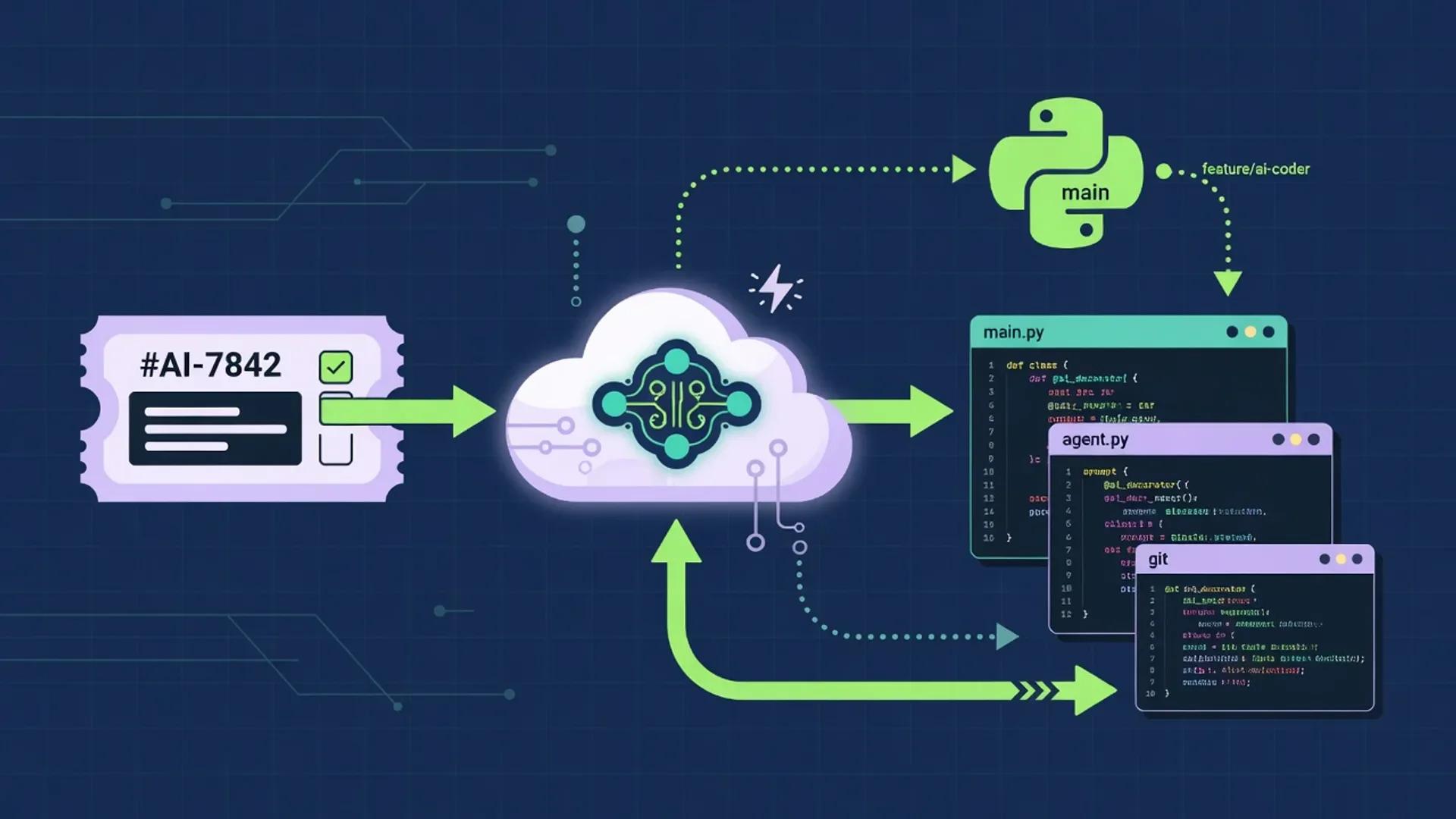
A multi-step AI coding workflow that keeps humans in charge of framing, architecture, security, and merge decisions while agents handle research, boilerplate, test scaffolding, and review. Drawn from primary docs and standards published between July 1 and August 2, 2026.

Best AI Tools for Developers (July 2026)
A research-grounded shortlist of the AI tools software engineers keep reaching for in July 2026: GitHub Copilot, Cursor, ChatGPT, Claude, and Perplexity. Pricing, model lineup, and product capabilities pulled from official vendor documentation in late July 2026.
Catalog
Related products

Cursor
Editorially ResearchedAI coding agent and editor built for ambitious software, with codebase-aware generation and parallel agents.
Stands out · AI-native editor with parallel agents, cloud agents, and first-party Composer and Grok models.

Claude
Editorially ResearchedAnthropic's AI assistant focused on careful writing, long-context work, and the strongest agentic coding stack as of July 2026.
Stands out · A general-purpose assistant and agent platform optimized for careful writing, 1M-token long-context work, and the strongest agentic coding surface in 2026 — anchored by Opus 5, Sonnet 5, Fable 5, Claude Code, and Claude Cowork.

ChatGPT
Editorially ResearchedOpenAI's general-purpose AI assistant for writing, analysis, coding help, and everyday knowledge work.
Stands out · A mainstream, general-purpose AI assistant with the broadest multimodal feature surface and one of the largest everyday user bases for conversational AI.
Related
Compare this product

Next step
Explore GitHub Copilot
Visit the official site, or browse the full catalog for similar tools.