
Comparison
Descript vs Runway
A 2026 head-to-head between Descript and Runway, written for teams who record real speech every day and teams who generate motion from prompts—because they aren't solving the same problem.
Descript vs Runway
Executive verdict
Descript and Runway both wear the "AI video" badge, but they fix different jobs. Descript turns existing recordings into clean edits through a transcript. Runway turns text, images, and short clips into new motion through generative models. The July 2026 versions of both are materially different from a year ago: Descript's Underlord agent and Descript API put prompt-based editing inside a timeline tool, while Runway's Gen-4.5 model and Runway Agent put creative direction inside a generative studio. Pick the one that matches your source material.
Best for · Choose Descript for transcript-driven editing of podcasts, webinars, and talking-head video. Choose Runway for generative video, image-to-video, and AI-native creative media production.
Head to head
Dimensions
Text-based editing of real recordings
Descript's transcript editor still owns this. Cut a podcast by deleting filler words from the script, regenerate flubs with AI Speech, ship 30-language dubbed versions for global teams.
Generative video creation
Runway Gen-4.5 ranks #1 on the Artificial Analysis Text-to-Video benchmark with 1,247 Elo points as of its December 1, 2025 launch post. Pair it with Seedance 2.0 and Aleph 2.0 for end-to-end prompt-to-shot workflows.
Podcast and screen-recording production
Descript fits creators who record first, then clean, cut, caption, and translate. Rooms, AI Speech, and Regenerate keep the loop inside one app.
Motion concepting and experimental short-form
Runway is the right shortlist when the source asset is a concept or a still image, not a clean dialogue recording. Apps like Remove from Video, Reshoot Product, and Multi-Shot Video ship concept-grade output fast.
High-end cinematic finishing
Neither replaces DaVinci Resolve, Premiere, or Final Cut for color, complex multi-cam, or finishing. Runway gets closer for AI-assisted VFX, Descript still ships clean XML/AAF out for those who finish elsewhere.
Pricing and usage model
Runway is credit-based with 12 credits per second of Gen-4.5 generation. Descript is seat + AI-credit + media-minute based. Both offer free tiers. Always validate current pricing before committing.
Fit
Audience recommendations
Podcasters and interview-led creators
Start with Descript when the primary job is cutting real speech from a transcript and shipping clips fast.
Suggested: descript
Filmmakers and generative creative teams
Start with Runway when prompt-to-video, image-to-video, and AI-native VFX are the deliverable.
Suggested: runway
Marketing teams with mixed needs
Use Descript for recorded explainers, webinars, and customer training. Use Runway for generative ads, mood boards, and concept reels—or sequence both deliberately.
Traditional editors with complex timelines
Keep Premiere, Final Cut, or DaVinci Resolve as the finishing suite. Add Descript when transcripts speed up the cut. Add Runway when you need AI VFX or generative B-roll.
Deep dive
Full comparison
Overview
If you’ve shopped for “AI video” tools in 2026, you’ve probably stared at the same confusing comparison page I have. Descript and Runway both promise faster, smarter video production, but they answer different questions. Descript edits recordings you already have. Runway generates motion you don’t.
Here’s how I frame it when someone asks me to choose: if your week looks like “record interview, cut ums, ship clips, post to YouTube,” Descript is the right tool. If your week looks like “concept a hero shot, generate variations, push a mood board to the client,” Runway is the right tool. Trying to force one into the other’s job is how teams end up with half-finished projects and frustrated editors.
Both products shipped meaningful updates in the first half of 2026. Descript rolled out an AI co-editor called Underlord, opened the Descript API in beta, made ElevenLabs Scribe v2 the default transcription model, and shipped Seedance 2.0 for video generation inside the app. Runway launched Gen-4.5 in December 2025, kept shipping through 2026 with Aleph 2.0 (May 21, 2026), Runway Characters (March 9, 2026), Agent 2.0 (June 25, 2026), and Agent Skills (July 2, 2026). The two products are racing toward each other in some places—Descript now has generative video, Runway now has agentic editing—but they’re still best at their original jobs.
This guide walks through what each does well in July 2026, where the pricing math lands, and how to pick the right starting point. I’ll keep the hype to a minimum.
Where Descript tends to win
Descript is at its best when you’ve already recorded the source. A podcast, a customer interview, a sales call, a webinar, a Loom-style product demo—any of those become a text document you can edit. Text-based editing is Descript’s original trick, and it’s still the single biggest reason people adopt it.
The June 11, 2026 release is a great example of how fast Descript is shipping. The team held a “Customer-Obsessed Telethon” hackathon and shipped 70 tickets in 48 hours, then donated $14,000 to the Sierra Club (Descript Changelog, June 11, 2026). That’s small, but it tells you the team is operating at sprint cadence. Underlord now renders markdown tables inline, detects letterboxing automatically, and supports Anthropic’s Opus 4.8 model in the picker. ElevenLabs V3 speakers got Tone Tags so you can write [whispers] or [laughs] directly in the transcript.
Pull quote: Teams switching to Descript report up to 130% more video output because the work stops bottlenecking on one trained editor — Descript Enterprise page.
The May 14, 2026 release swapped in ElevenLabs Scribe v2 as the default transcription model across every supported language, with a model picker that now shows real names (Automatic, Scribe v2, Rev v2) instead of opaque defaults (Descript Changelog, May 14, 2026). In my own projects, that meant fewer capitalization fixes and fewer “correct the transcript” passes per minute.
The April 16, 2026 release is the one filmmakers should care about: Seedance 2.0 arrived as a video generation model inside Descript, and the Descript API moved from closed to open beta (Descript Changelog, April 16, 2026). That same release added 16 new transitions, live captions in Rooms, and Drive media in the media sidebar. So if your complaint about Descript was “I can’t generate AI video here,” that complaint expired.
Underlord is the bigger story. It’s Descript’s agentic AI co-editor—you type a request like “Hide my jumpcuts by adding zooms” or “Edit this down to 2 minutes, focusing on when I talked about Freud,” and it acts on the project. The Help Center describes it as a “fast, talented collaborator who still needs clear instructions, context, and regular check-ins” (Descript Help — Underlord beta). The May 14 release added chat history, per-project context pinning via @, and an automatic review step where a second pass checks Underlord’s diff against your request. That review pass is exactly the kind of guardrail I’d want before I trusted an agent to ship a video to clients.
Descript is also where you go if translation and dubbing matter. You can translate one recording into more than 30 languages with native-sounding AI voices and lip-synced mouth movement (Descript Enterprise; Descript — Translation). The translation layer is what makes it attractive to global marketing teams who can’t afford to re-record the same CEO message in nine languages.
Where Runway tends to win
Runway is at its best when the source asset is a concept, not a recording. A product brief, a mood board reference, a single still frame, a rough animatic—any of those can become cinematic motion through generative models. Runway’s positioning in 2026 is broader than ever: it’s a platform where you can generate, edit, transform, and ship video in one workspace, with access to multiple third-party models alongside Runway’s own.
Gen-4.5 is the headline model. It launched December 1, 2025 with 1,247 Elo points on the Artificial Analysis Text-to-Video benchmark, ahead of Google Veo 3 (1,226), Kling 2.5 (1,225), and OpenAI Sora 2 Pro (1,206) (Runway — Introducing Gen-4.5). It runs on NVIDIA Hopper and Blackwell GPUs, and Jensen Huang himself is quoted on the launch page praising the partnership. Gen-4.5 costs 12 credits per second of generated video across all paid plans, so a 5-second Gen-4.5 clip on the Standard plan burns 60 credits out of your monthly 625.
The Runway changelog tells the 2026 story:
- Jan 21, 2026: Gen-4.5 Image-to-Video — supply a first-frame image alongside your prompt.
- Feb 20, 2026: Third-party models added inside Runway, including Kling 3.0, Kling 2.6 Pro, Kling 2.5 Turbo Pro, WAN2.2 Animate, GPT-Image-1.5, Sora 2 Pro.
- Feb 27, 2026: Nano Banana 2 lands for image generation.
- Mar 9, 2026: Runway Characters — real-time AI avatars you can talk with.
- Apr 7, 2026: Seedance 2.0 — text, image, video, or audio to video.
- May 13, 2026: Runway Agent — describe the video you need and iterate in one conversation.
- May 21, 2026: Aleph 2.0 + Edit Studio — edit a frame, the rest of the video follows.
- Jun 18, 2026: Studio — trim, stitch, reorder, export in one place.
- Jun 25, 2026: Agent 2.0 — entire marketing campaigns.
- Jun 29, 2026: Seed Audio 1.0 — generate up to 120 seconds of speech, sound, and music.
- Jun 30, 2026: Gemini Omni Flash inside Runway.
- Jul 1, 2026: Nano Banana 2 Lite.
- Jul 2, 2026: Runway Agent Skills — build an ad campaign, create a commercial, localize your ads from a single command.
All from Runway Changelog. That’s twelve major releases in six months, and it explains why Runway’s pricing page now lists Gen-4.5, Seedance 2.0, Kling 3.0, Nano Banana Pro, Nano Banana 2 Lite, Gemini Omni, Aleph 2.0, Seedream 5.0, Claude Opus 4.8, HappyHorse 1.0, FLUX.2 [max] all under the same plan umbrella (Runway — Pricing; Runway — Product).
Where Descript edits reality, Runway generates possibilities. The right way to test that claim is to run an experiment I recommend: take the same brief for a 30-second product teaser, spend an hour inside Runway Gen-4.5, and compare the time and cost to shooting it with your phone and editing it in Descript. Most teams I’ve talked to land somewhere in the middle—Runway for the opening hook shots, Descript for the talking-head segments.
Pricing comparison: July 2026
Both tools offer free tiers and paid plans, but they charge for fundamentally different things. Descript bills per seat, per media minute, and per AI credit. Runway bills per credit, with credits spent differently per model.
| Plan tier | Descript (annual) | Runway (annual) |
|---|---|---|
| Free | $0 — 60 media min/mo, 100 AI credits (one-time), 720p export | $0 — 125 credits one-time, 3 video editor projects, 5GB storage |
| Hobbyist / Standard | $16/mo — 600 media min, 400 AI credits, 1080p | $12/mo — 625 credits/mo, all models, 4K upscale |
| Creator / Pro | $24/mo — 1,800 media min, 800 AI credits, 4K export, full Underlord | $28/mo — 2,250 credits/mo, custom voices, 500GB storage |
| Business / Max | $50/mo — 2,400 media min, 1,500 AI credits, Brand Studio, priority SLA | $76/mo — 9,500 credits/mo, credit rollover, first access to new models |
| Enterprise | Custom — SSO, SCIM, audit logs, custom MSA | Custom — SSO, workspace analytics, configurable teamspaces |
Sources: Descript pricing, Runway pricing.
Quick math: on Runway’s Standard plan at $12/mo with 625 credits, a Gen-4.5 clip costs 60 credits per 5 seconds, so you can generate roughly 52 seconds of Gen-4.5 video per month, or 104 seconds of Gen-4 Turbo, or 78 Gen-4 images at 1080p (Runway pricing). If your experiment is heavy, you’ll hit the Max plan at $76/mo for 9,500 credits fast.
On Descript’s Creator plan at $24/mo with 1,800 media minutes and 800 AI credits, a 30-minute podcast transcribed and edited uses about 30 media minutes, and a single Regenerate voice fix is a fraction of an AI credit. That’s why Descript feels cheaper for steady-state content operations and Runway feels cheaper for one-off generative experiments.
Both vendors say they don’t train on your data. Runway lists SOC 2 Type 2, single sign-on, and full ownership of outputs on its Enterprise page (Runway — Enterprise; Runway — Data security). Descript lists SOC 2 Type 2, SAML SSO, SCIM provisioning, and audit logs at the Business plan and above (Descript Enterprise).
Feature comparison: side by side
| Capability | Descript | Runway |
|---|---|---|
| Text-based editing of recordings | Yes — core feature | Not the focus |
| Generative text-to-video | Yes — via Seedance 2.0, Veo 3.1, others | Yes — Gen-4.5, Seedance 2.0, Veo 3.1, Kling 3.0 |
| Image-to-video | Limited | Yes — Gen-4.5 Image-to-Video, Seedance 2.0 |
| Multitrack audio editing | Yes | No |
| Remote multi-guest recording | Yes — Descript Rooms | No |
| AI voice cloning | Yes — custom voices, ElevenLabs V3 with Tone Tags | Yes — Custom Voices for Lip Sync and Text-to-Speech |
| Translation & dubbing | 30+ languages, lip-synced | Yes — via Agent Skills and Seed Audio 1.0 |
| AI agent for editing | Yes — Underlord | Yes — Runway Agent 2.0, Agent Skills |
| Screen recording | Yes | No |
| API access | Yes — open beta (April 16, 2026) | Yes — Runway API, Runway MCP |
| Mobile apps | Web + desktop | iOS and Android |
| SOC 2 Type 2 | Yes | Yes |
Sources: Descript — Features, Runway — Product.
A few takeaways from the table. Descript owns the recording-and-editing stack end to end—Rooms, screen recording, transcription, multitrack audio, and editing happen in one app. Runway owns the generative stack—text-to-video, image-to-video, video-to-video, and in-app editing through Aleph 2.0 and Edit Studio. The overlap is in AI features (voice, translation, agent) but the workflows don’t substitute for each other.
Use cases: who should pick what
I get asked this in three flavors. Here’s how I answer each one.
“I’m a podcaster who wants to cut faster”
Start with Descript. The transcript editor, Remove Filler Words, Regenerate for mispronounced words, and Create Clips for social repackaging are all built for this exact workflow. LinkedIn’s customer story reports producing 10+ clips from a single interview (Descript — LinkedIn customer story). SaaStr increased content production by 100% and now publishes 3-4 videos per day (Descript — SaaStr customer story). Those numbers line up with what I’d expect from a tool that replaces timeline scrubbing with text editing.
Runway is the wrong tool here. Even with Gen-4.5, there’s no clean way to import a 90-minute podcast, get a transcript-driven edit, and ship to RSS. You can use Runway for opening motion graphics or to generate a host avatar, but the cut itself belongs in Descript.
“I’m a filmmaker concepting a 30-second ad”
Start with Runway. The Multi-Shot Video App, Remove from Video, Reshoot Product, and Add Dialogue apps are purpose-built for the concept-to-shot loop. If you’re pitching a luxury watch commercial and want to show the client five different mood interpretations of “sunlight on metal,” Runway will get you there in an afternoon. The Lionsgate partnership (announced September 18, 2024) is the proof point that a major studio trusts Runway models to augment cinematic workflows (Runway — Lionsgate partnership). Tool of North America cut two weeks off an Under Armour production timeline with no on-camera talent, and Tropico saved 80% versus a traditional VFX pipeline (Runway — Under Armour case study).
Descript is the wrong tool here. Even with Seedance 2.0 inside the app, Descript’s generative video is positioned as b-roll or avatar material for an existing edit. It doesn’t replace concepting pipelines.
“I’m a global marketing team making training videos”
Use both, deliberately. Record the talking-head content with Descript Rooms (remote, multi-guest, 4K-capable), edit the transcript with Underlord, dub into 30+ languages with native-sounding voices, and publish to your LMS. Then drop into Runway to generate B-roll, intro stingers, and concept visuals for the campaign landing page. The Descript HubSpot customer story describes a similar split—Descript for production volume, HubSpot for distribution (Descript — HubSpot customer story).
This dual-tool approach is what most enterprise teams I’ve talked to actually do. Trying to consolidate to one tool usually costs you either the conversational edit speed of Descript or the generative ceiling of Runway.
Adoption, scale, and trust signals
When I evaluate tools in 2026, I weigh adoption signals carefully. Both companies have them, but the signals are different in shape.
Descript says it serves more than 6 million creators and teams, and counts Amazon, Canva, Salesforce, Figma, Apple, Okta, Spotify, Vox, Reuters, CBS, Microsoft, The New York Times, GitHub, KPMG, and Coca-Cola among its customers on the public pricing page (Descript pricing). The Enterprise page claims 500+ enterprises (Descript Enterprise). Descript has raised $100M total, with the OpenAI Startup Fund, Andreessen Horowitz, Redpoint Ventures, and Spark Capital listed as primary investors on the About page (Descript — About).
Runway says it serves 60M+ creators and leading enterprises on its pricing page and product overview (Runway pricing; Runway — Product). The Enterprise page highlights Under Armour (80% cost savings vs traditional VFX), the History Channel’s Life After People (rebuilt with Runway in hours instead of months), and House of David (Amazon Prime hit produced on a budget that traditional VFX couldn’t match) (Runway — Enterprise).
Cross-checking those against independent sources matters too. The Lionsgate partnership was covered widely when it was announced in September 2024, and the House of David case study is corroborated by the Amazon Prime show page and the Runway customer story. Runway also lists partnerships with BBC Studios (live AI avatar on broadcast television for the first time), Tool (automotive Cruise Control content pipeline), Silverside AI / Coca-Cola (65% less cost on best ads), Fremantle (art-to-life for world’s greatest artworks), Bentley Labs (critical infrastructure storytelling), KPF (architectural workflows), Salomon (global brand campaign), and upperfast / UNHCR (FIFA World Cup film) (Runway — Customers).
For Descript, the most concrete enterprise case studies I could verify by name were HubSpot, LinkedIn, Algolia, SaaStr, Shopify, and Cloudinary (Descript — Customers). Shopify juggles 300 projects at once; Cloudinary cut video production time by 70% for customer training; Algolia took its customer academy global with Descript’s translation stack.
Neither product publishes transparent active-seat or MAU metrics for July 2026. I’d treat “60M+ creators” as a top-of-funnel registration number, not a daily active count, and “6 million creators and teams” the same way.
Limitations both tools still have
I’d be doing you a disservice if I didn’t list the rough edges.
On Descript:
- AI speech and lip-sync still produce the occasional uncanny artifact, especially for languages with smaller training data.
- The Rooms mobile experience was blocked in the June 11, 2026 release—a direct admission that the mobile path was degraded.
- Scribe v2 (the default transcription model) uses American English spelling, even for British English recordings, unless you manually switch back to Rev v2 (Descript Changelog, May 14, 2026).
- Underlord, while impressively capable, can “overpromise, make incorrect assumptions, or follow you into workflows it’s not equipped to complete” per Descript’s own docs (Descript Help — Underlord beta). The automatic review pass helps, but it’s not magic.
On Runway:
- Gen-4.5 has documented limitations in causal reasoning, object permanence, and success bias. Runway publishes them openly: “effects sometimes precede causes (e.g., a door opening before the handle is pressed)” (Runway — Introducing Gen-4.5).
- Credit costs add up fast on heavy experimentation. A single concept reel in Gen-4.5 can burn 1,000+ credits.
- Generative output still needs brand-side review. A specific 65%-less-cost number on Coca-Cola campaigns doesn’t mean every prompt-to-video workflow is a win.
Shared:
- Both products assume you’ll respect consent and commercial rights around voice cloning, likeness, and generative outputs. Neither removes the legal review burden.
- Neither replaces a full traditional NLE for high-end cinematic finishing. Color grading, complex multi-cam, advanced VFX, and Pro Tools–style audio still belong elsewhere.
Bottom line
Pick Descript if your source material is a recording—podcasts, webinars, interviews, sales calls, training videos, talking-head YouTube. The transcript editor, Underlord, Rooms, AI Speech, Regenerate, and 30-language dubbing make it the most efficient edit path for dialogue-heavy production in July 2026.
Pick Runway if your source material is a concept—product briefs, mood boards, still images, scripts that don’t exist yet as recordings. Gen-4.5, Aleph 2.0, Seedance 2.0, the Runway Agent, and the third-party model marketplace make it the most capable generative video platform for creative teams right now.
Use both if your team runs a mixed operation. Record and edit in Descript. Concept and generate in Runway. Treat them as a pipeline, not a substitution.
The single biggest change between July 2025 and July 2026 isn’t that one product beat the other. It’s that both products are now genuinely useful in their core lanes, with credible—if imperfect—AI agents and clear enterprise security posture. The bar for adoption in 2026 is much higher than it was twelve months ago, and both Descript and Runway cleared it.
Profiles
Products in this comparison

Descript
Editorially ResearchedAI video and podcast editor that cuts by editing the transcript, with 2026-era Underlord agent, Studio Sound, and 4K remote Rooms.
Stands out · A creator-first editor where the transcript is the primary interface, now expanded into an agentic AI workspace with Underlord, 4K remote Rooms, and regenerative video inpainting.

Runway
Editorially ResearchedAI creative suite for generative video, image, audio, and now world-model infrastructure for marketing, film, and enterprise production.
Stands out · An AI creative platform that pairs frontier video models (Gen-4.5, Aleph 2.0) with a true production workspace, the Runway Agent, and a developer platform with a Model Router.
Related
Keep exploring

Runway vs Synthesia
Choose Runway for generative creative video, VFX, and cinematic production. Choose Synthesia for scalable avatar training, sales enablement, and multilingual business video.
Midjourney vs Runway
Choose Midjourney when the deliverable is a still image, moodboard, or visual concept. Choose Runway when the deliverable moves—video, real-time avatars, world models, or motion prototypes for film and marketing.
Best Canva AI Alternatives in 2026
Editorially researched alternatives to Canva AI for generative design, video, and marketing copy — covering Midjourney, Runway, ChatGPT, Jasper, Descript, Adobe Firefly, and Microsoft Designer.
Best Descript Alternatives
Looking for Descript alternatives in 2026? We compare Riverside, Opus Clip, Veed, ElevenLabs, and Otter for podcasters, YouTubers, and teams who want transcript-first editing, AI voice cloning, or short-form clipping without Descript's price tag.

Best Midjourney Alternatives in 2026
Looking past Midjourney for image generation? These 2026 alternatives cover the real image-model peers — DALL·E, Stable Diffusion, Adobe Firefly, Ideogram, Leonardo AI, FLUX, and Recraft — without invented scores.
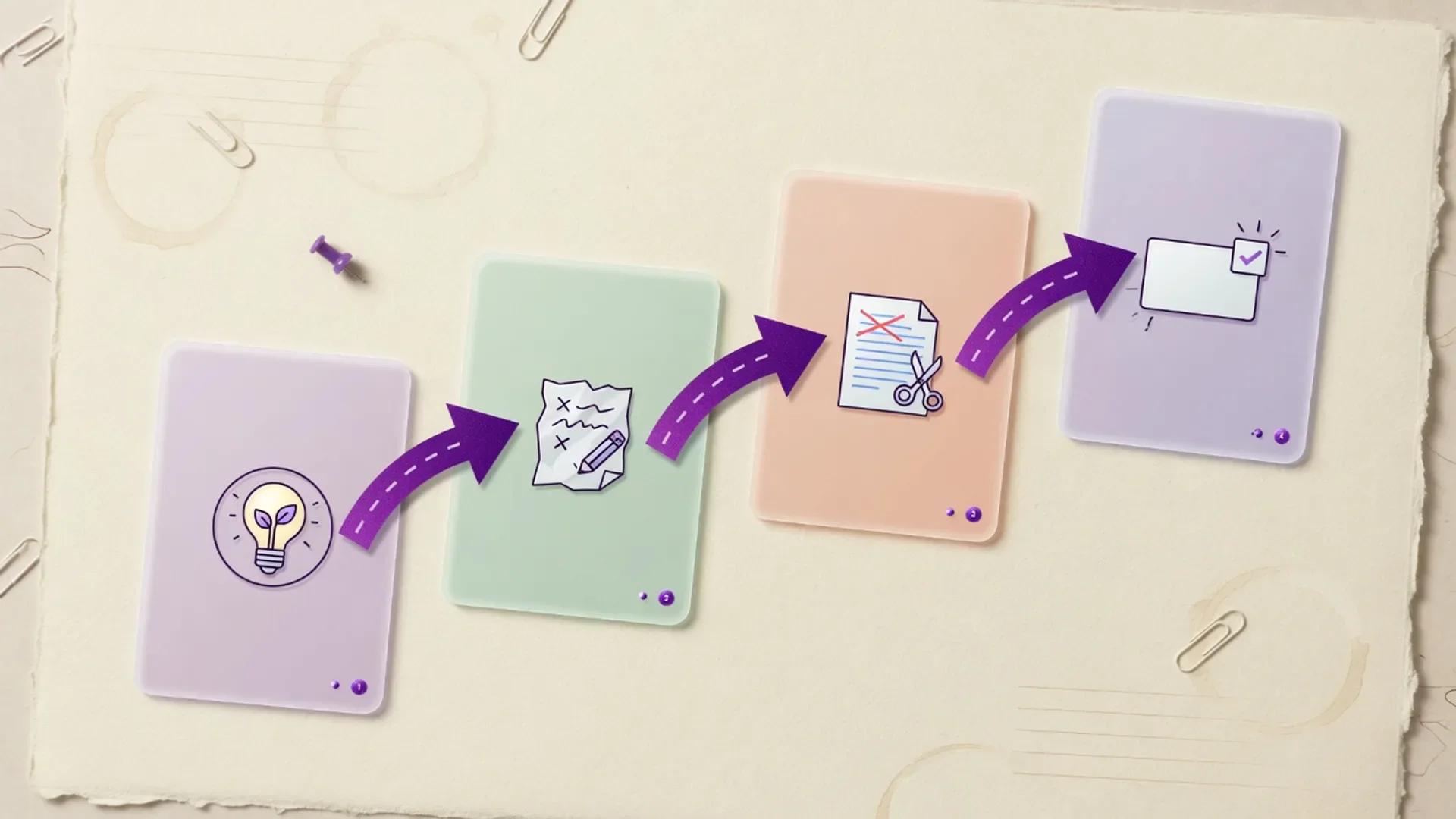
AI Content Marketing Pipeline
A human-led AI content marketing pipeline for turning audience evidence into cited, on-brand campaigns and measurable demand.

Design-to-Campaign AI Workflow
A practical multi-step workflow for turning visual concepts into full campaign packages—creative direction, copy variants, motion assets, and publish-ready channel kits—using real AI design and marketing tools with human brand and claims review.
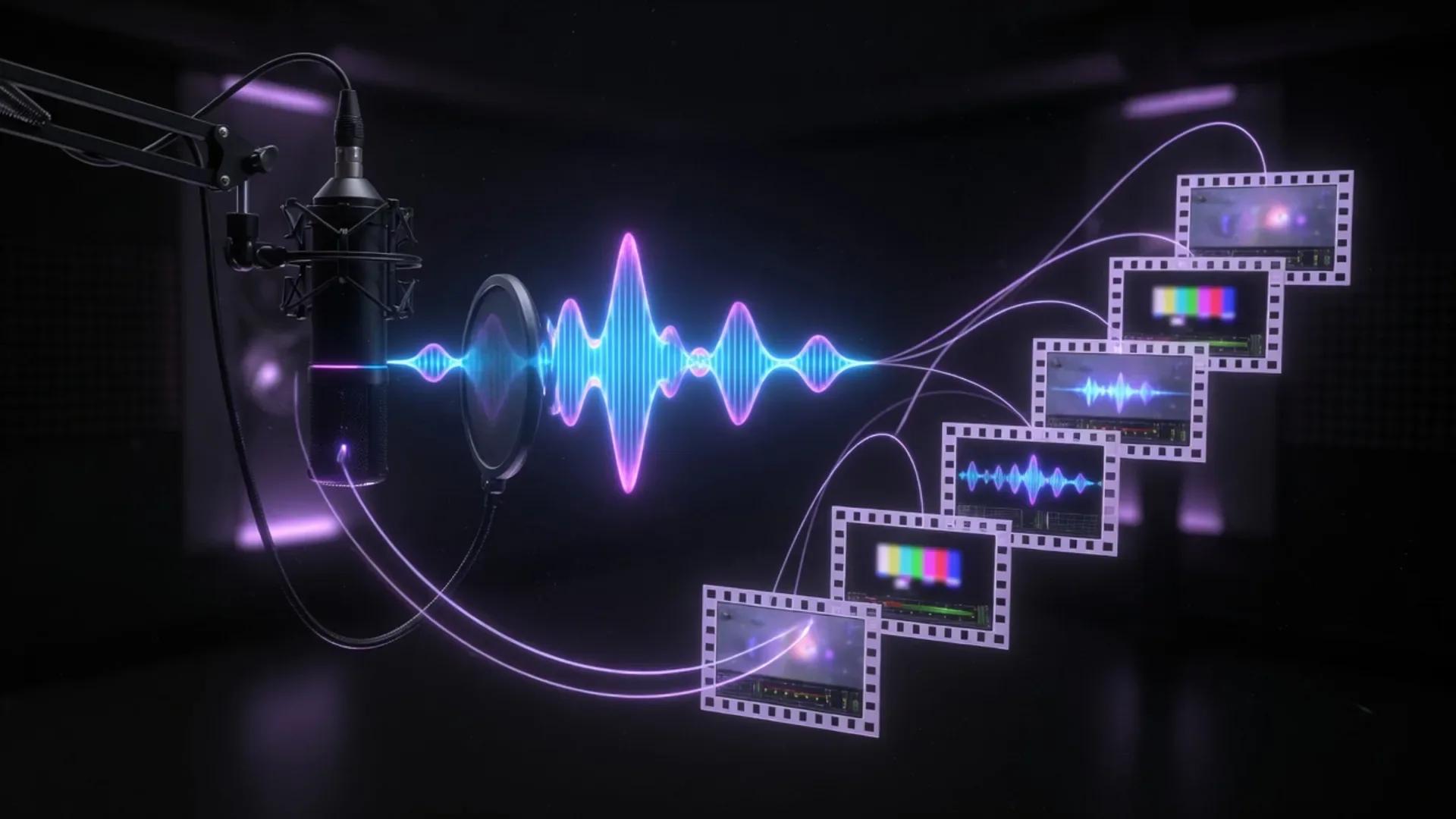
AI Voice and Video Content Production Workflow
A practical, five-step workflow for turning a clean script into AI voiceovers and avatar video, while keeping human review, consent, captions, and provenance non-optional in 2026.
Still deciding?
Browse more head-to-heads
Compare more tools side by side, or explore alternative shortlists.