

Product profile
Editorially ResearchedZapier AI
The no-code automation platform that quietly became the AI governance layer for the rest of your SaaS stack.
Zapier AI
Fit
Quick verdict
Best for
Teams that need broad app connectivity, AI-assisted workflow building, and a single governance layer for every AI surface they adopt.
Not ideal for
Organizations that need fully on-prem orchestration, sub-100ms hard-real-time pipelines, or engineering-owned infrastructure by policy.
Primary strength
The largest consumer-grade no-code automation catalog, now wrapped in an AI governance and MCP layer that no competitor matches.
Primary limitation
Task-based pricing can climb fast for chatty workflows, AI steps are still non-deterministic, and complex enterprise architecture review still belongs to your security team.
Profile
Overview
Zapier AI is Zapier's umbrella for AI-assisted Zaps, AI by Zapier steps, Zapier Agents, Zapier Chatbots, Zapier MCP, AI Guardrails, and a Bring-Your-Own-Model option — all layered on top of a 9,000+ app connector catalog and 30,000+ actions. In 2026 it's the closest thing the market has to a single governance plane for everything your team wants an LLM to do.
Quick Verdict
Zapier AI in 2026 is the no-code automation platform that grew up and became an AI governance layer. If you want the broadest app connector catalog in the category, AI-assisted workflow building that actually works, and one consistent rulebook for what Claude, ChatGPT, and Cursor are allowed to touch, this is still where most teams should start. Just budget for it — task and activity metering can climb quickly once AI and MCP enter the mix.
What Zapier Is (and Isn’t) in 2026
Zapier is a no-code automation platform that connects 9,000+ apps and exposes 30,000+ actions across them. Every automation you build is a “Zap” — a trigger in one app plus one or more actions in another. That hasn’t changed since Wade Foster, Bryan Helmig, and Mike Knoop launched the company out of Columbia, Missouri in 2012 via Y Combinator (Wikipedia; Y Combinator profile).
What changed in 2026 is the AI scaffolding around that core engine. “Zapier AI” is no longer a single feature. It’s an umbrella covering:
- Copilot — the AI assistant that builds Zaps, Tables, Forms, Agents, and Chatbots from a natural-language prompt (Zapier blog).
- AI by Zapier — drop-in steps for extraction, summarization, and generation inside any Zap.
- Zapier Agents — background AI “teammates” that take multi-step action across apps on their own (zapier.com/agents).
- Zapier Chatbots — customer-facing bots trained on your knowledge sources.
- Zapier MCP — a managed Model Context Protocol server that connects Claude, ChatGPT, and Cursor to 9,000+ apps (zapier.com/mcp).
- AI Guardrails — built-in safety checks for PII, prompt injection, toxicity, and sentiment (Zapier blog).
- Bring Your Own Model (BYOM) — route AI through AWS Bedrock under your own keys (Govern page).
What Zapier isn’t: it isn’t a hard-real-time data pipeline, isn’t an enterprise iPaaS with deep SAP/Workday choreography out of the box, and isn’t a no-code replacement for code when your business logic genuinely needs a custom service mesh. Be honest about that boundary and you’ll be fine.
Who Should Use Zapier in 2026
I think about Zapier’s audience in three concentric rings:
-
Anyone in SaaS operations. Ops, marketing ops, RevOps, sales ops, and founders who live across five to fifteen SaaS tools. Zapier is still the fastest way to glue them together without writing code. TrustRadius gives it a 8.9 out of 10 across 872 verified reviews (TrustRadius), with reviewers repeatedly calling out the breadth of integrations and the “no-code” experience.
-
AI-curious teams. Anyone whose team has started adopting ChatGPT, Claude, or Cursor and is now wondering where the work actually happens. Zapier MCP and Zapier Agents are the answer. As of mid-2026, Zapier MCP was powering 195,000+ MCP servers and 4.6M+ tool calls (zapier.com/mcp).
-
IT and platform owners. The least obvious buyer but probably the most important in 2026. The new Governance Unlocked release — action restrictions, managed app connections, domain restrictions, app access controls, BYOM, audit log, and log streaming — turns Zapier into the single plane that decides what every AI surface is allowed to touch (zapier.com/govern).
Where Zapier still isn’t the right call: high-throughput custom data pipelines, fully air-gapped regulated environments, or scenarios where your security team will only sign off on self-hosted open-source.
What’s New: Latest Features & 2026 Updates
A lot has shipped. Here are the headline 2026 updates I think matter:
- Zapier Agents is now Generally Available with SOC 2-compliant controls and a separate “activities” allowance that does not drain your core task pool (zapier.com/agents; Zapier help).
- MCP for Enterprise launched as a managed MCP server with action-level controls, audit log, and BYOM (zapier.com/govern).
- Workspaces (Enterprise, coming soon) — segregated governed spaces per team, each with its own apps, connections, permissions, and restrictions (zapier.com/govern).
- Zapier SDK is in Open Beta — programmatic access to the same 9,000+ apps from your own code or coding agents (zapier.com/govern).
- AI Guardrails by Zapier is generally available — screens AI output for over 30 PII types, prompt-injection attempts, toxic language, and sentiment before the next step runs (Zapier blog).
- Approval Requests (Beta, Enterprise) — require a human to greenlight changes to live Zaps.
- Compare Versions and Alerts (new) on Enterprise for change-management and observability.
- Annual Task Limits (new) for more predictable enterprise pricing.
- Bring Your Own Model via AWS Bedrock for regulated buyers (zapier.com/govern).
- Log Streams to Datadog or Splunk so SOC teams can monitor Zapier activity from the SIEM they already run.
- AI Custom Actions (Beta) — build custom AI actions and share them across your team.
- AI troubleshooting (Beta) in the Zap editor — explains failures in plain language.
- Human in the Loop — pause any Zap for a human review before a sensitive step runs (Zapier blog).
- Code by Zapier runtime now defaults to 30 seconds on paid plans, extendable up to 8 minutes per step (Pricing; help).
- Copilot now lives across the Zap editor, Tables, Forms, Agents, Chatbots, and Canvas — you can sketch a system in plain language and Copilot will wire it together (Zapier blog).
The common thread: every AI surface now plugs into a single set of organizational rules. That’s a quietly big shift.
Pricing Breakdown — July 2026
Zapier’s pricing has two dials: the plan and the task tier. On top of that, Agents and Chatbots are separate add-on products billed in their own units. Pulled straight from the live pricing reference (zapier.com/pricing; machine-readable on July 31, 2026):
| Plan | Best for | Headline features | Tasks/mo (top tier shown) | USD price (annual) | USD price (monthly) |
|---|---|---|---|---|---|
| Free | Solo, low volume | 2-step Zaps, basic MCP/Agents/Chatbots | 100 | $0 | $0 |
| Professional (Pro) | Individuals wanting the full platform | Multi-step Zaps, premium apps, webhooks, AI by Zapier, filters, paths | 750 / 1,500 / 2,000 / 5,000 / 10,000 / 20,000 / 50,000 / 100,000 / 200,000 / 500,000 / 1M / 2M | from $19.99/mo (750 tasks, annual) | from $29.99/mo (750 tasks) |
| Team | Teams of up to 25 building together | Shared workspaces, shared app connections, SAML SSO, priority support | 2,000 / 5,000 / 10,000 / 20,000 / 50,000 / 100,000 / 200,000 / 500,000 / 1M / 2M | from $69.00/mo (2,000 tasks, annual) | from $103.50/mo (2,000 tasks) |
| Enterprise | Org-wide scale with governance | SCIM, BYOM, log streaming, audit log, annual task limits, managed connections | Custom | Sales-arranged | Sales-arranged |
A few pricing mechanics worth understanding before you commit:
- Annual billing is 33% cheaper than monthly. All “annual” prices above already reflect that.
- Pay-per-task (PPT) overage kicks in once you exceed your task allowance. Annual overage is 1.25× the base rate; monthly overage is 2.5× the base rate (zapier.com/pricing).
- Pause ceiling: PPT keeps running up to 3× your plan’s task limit, then everything queues until your cycle resets.
- 19 billing currencies including USD, GBP, EUR, INR, JPY, BRL, AUD — exchange rates are locked at time of payment.
- Non-profit discount: extra 15% off (excludes pay-per-task).
- Free trial: 14 days of Pro without a credit card.
Add-on pricing
Zapier Agents and Zapier Chatbots are billed separately so they don’t compete with your automation budget:
| Add-on | Free allowance | Paid tier | What you pay for |
|---|---|---|---|
| Zapier Agents | 400 activities/mo | Pro starts around $33.33/mo (annual) for 1,500 activities | Activities — triggers, knowledge lookups, actions, browser steps, searches, Chrome-extension messages. Free run cap is 10 activities, paid is 40, then the agent asks before continuing. |
| Zapier Chatbots | 2 chatbots | Around $13.33/mo (annual) for ≈5 chatbots; around $66.67/mo (annual) for ≈20 chatbots; custom beyond 20 | Number of chatbots and their capabilities, not usage. |
MCP doesn’t have its own SKU — it draws 2 tasks per successful tool call from your existing task pool (Zapier help).
Zapier vs Alternatives (2026)
I’ve used four of these seriously. Here’s the honest comparison table.
| Capability | Zapier | Make | n8n | Workato | Power Automate |
|---|---|---|---|---|---|
| Apps / connectors | 9,000+ apps, 30,000+ actions (AI) | 3,000+ apps (Make) | 400+ native + open-source nodes; mostly connector-on-demand | Enterprise focus: Workday, Salesforce, ServiceNow, NetSuite (Workato) | 1,000+ standard/premium/custom connectors, deep Microsoft stack |
| Editor | Visual linear + Copilot | Visual scenario graph | Node-graph, code-friendly | Recipe-based, governance-first | Visual flow + RPA desktop flows |
| AI approach | Copilot, AI by Zapier, Agents, Chatbots, MCP, AI Guardrails, BYOM | Make AI Agents, AI Toolkit, MCP Server, AI Content Extractor | Code-friendly AI agents via LLM nodes and SDK | Genies, Agent Studio, Otto (governed agents) | Copilot Studio + autonomous agents in flows |
| Billing unit | Tasks + (Agents: activities) | Credits per module action | Workflow executions (whole run) | Recipes + connectors (custom) | User/bot licenses |
| Free plan | 100 tasks/mo, 2-step | 1,000 credits/mo | Self-host Community (open source) | No free plan | 30-day free trial |
| Entry price | $19.99/mo annual (750 tasks) | $9/mo (5k credits) | €20/mo annual (2.5k executions) | Custom | $15/user/mo (Premium) |
| MCP | Managed MCP server with 9,000+ apps, 2 tasks/call | MCP Server exposed to external AI | SDK + self-host flexibility | MCP Gateway for enterprise | MCP support via Copilot Studio |
| Best for | Cross-SaaS glue + AI governance layer | Power users who want graph visuals at low cost | Developers who want to own their runtime | Enterprise ops with deep SAP/Workday/NetSuite | Microsoft 365 + Dynamics shops |
| Weakness | Most expensive per action | Smaller connector catalog than Zapier | Higher learning curve, weaker SLAs at lower tiers | Price + sales cycle | Lock-in to Microsoft ecosystem |
A few things this table doesn’t make obvious:
- Make is genuinely cheaper per unit of work. If your scenarios are long and your budget is tight, Make often wins on TCO.
- n8n is the developer’s favorite because it’s open-source, self-hostable, and bills per whole execution, not per step. That makes long workflows dramatically cheaper. Trade-off: smaller out-of-the-box connector library and a real learning curve.
- Workato is the iPaaS choice for enterprises with heavy SAP, Workday, ServiceNow, or NetSuite footprints — but you’ll be talking to sales.
- Power Automate is the obvious pick if your org lives in Microsoft 365 and Dynamics. Outside that universe, it gets less compelling fast.
Pull quote: “Any AI provider governs their own model. Anthropic governs Claude. OpenAI governs ChatGPT. Google governs Gemini. None will ever govern across models — that requires the layer underneath. Zapier is that layer.” — Zapier, zapier.com/ai
Real-World Use Cases
These are patterns I’ve seen work, with public results where Zapier or its customers have shared them.
1. Inbound lead enrichment and routing
A Zapier Agent watches new form submissions, enriches each contact with public firmographic data, scores against your ICP, then either drops them into a Mailchimp audience or hands them to a sales rep in Slack. Slate Magazine reported generating 2,000+ qualified leads in a single month with one agent (Zapier blog). NisonCo took weekly lead flow from ~270 to ~400 — a 48% lift — and saved about $30,000 a year on research and outreach (Zapier blog).
2. Sales and marketing operations backbone
Superhuman reports saving 42+ hours per week and reducing lead errors by 87% (customer story). Vendasta says it recovered $1M in pipeline and removed 282 days of manual work per year (customer story). Erewhon estimates $40k+ in annual headcount savings and a 5.5x ROI from a single workflow (customer story).
3. AI-assisted customer support
Okta says 13% of its support escalations are now fully automated, saving roughly 10 minutes per escalation (customer story). The combination is usually: inbound channel → AI by Zapier drafts a response → AI Guardrails scans for PII and toxic language → Human in the Loop asks a human to approve.
4. Internal IT and HR automation
Remote.com says Zapier handles the equivalent of 2,200+ days of work each month and resolves 28% of IT tickets with AI (customer story). Portland Trail Blazers reported a 94% reduction in guest feedback review time and saved one full-time headcount (zapier.com/ai).
5. Real estate and recruiting operations
JBGoodwin Realtors says Agents reduced manual workload by 25% and drove a 37% lift in recruiting (zapier.com/ai). Author.inc credits Zapier with a 20× productivity jump and 70% profit margins (zapier.com/ai).
6. MCP-powered AI assistants
The newest pattern: build a personal AI chief-of-staff by connecting Claude or ChatGPT to your Gmail, Slack, Salesforce, and calendar through Zapier MCP. Each MCP tool call costs 2 tasks. Early data from the Zapier MCP page shows 195,000+ MCP servers already created and 4.6M+ tool calls completed (zapier.com/mcp).
Limitations & Gotchas
I want to be honest about the parts that bite people:
- Task accounting is unforgiving. A Zap with seven actions that runs 5,000 times a month uses 35,000 tasks. AI steps cost more. MCP tool calls cost 2 each. If you’re chatty, monthly spend can climb fast (Zapier help).
- AI steps are non-deterministic. Don’t let an LLM-grade answer go straight to a customer-facing channel without a Human in the Loop checkpoint for sensitive flows (Zapier blog).
- Polling still applies. Free plans poll every 15 minutes, Pro every 2, Team and Enterprise every 1 (pricing). If you need sub-minute triggers and you’re on Free, you’ll be disappointed.
- Debugging is improving but still tedious. AI troubleshooting is in beta and helps, but for a complex multi-app flow, Zap history plus step-by-step testing remains the workflow.
- BYOM is AWS Bedrock only today (zapier.com/govern). If you standardize on Azure OpenAI or Google Vertex, you can’t route through them yet via Zapier.
- Paid editions are still per-month, not per-flow. That’s standard for the category but worth knowing.
Privacy, Security & Compliance
Zapier runs on the same credential infrastructure it’s used for 13+ years to manage your app connections. Everything MCP, Agents, Chatbots, or core Zaps touches flows through the same governed layer (zapier.com/mcp).
Compliance posture that I’m comfortable stating as fact:
- SOC 2 Type II — maintained and referenced across the MCP and Governance pages (zapier.com/mcp; Trust Center).
- SAML SSO is included on Team and Enterprise.
- SCIM provisioning, domain capture, super admin, app access controls, action restrictions, managed app connections, custom data retention are all Enterprise-tier controls (zapier.com/pricing).
- Audit log retention: 6 months on Team, 1 year on Enterprise.
- Log streaming to Datadog or Splunk for SIEM integration (Enterprise).
- BYOM via AWS Bedrock for model-side compliance control (Enterprise).
- AI Guardrails as a runtime layer for PII, prompt-injection, toxicity, and sentiment detection (Zapier blog).
- Privacy Policy and Legal hub are linked at zapier.com/privacy and zapier.com/legal.
The honest caveat: any platform with 9,000+ integrations inherits the security posture of its weakest connected app. Lock down app access controls and action restrictions before you turn on self-serve Zaps across the org.
Frequently Asked Questions
What is Zapier AI in 2026?
Zapier AI is the umbrella term for everything artificial intelligence inside Zapier — Copilot (the AI builder), AI by Zapier (drop-in AI steps), Zapier Agents (background AI teammates that take action), Zapier Chatbots (customer-facing bots), Zapier MCP (a Model Context Protocol server that gives Claude, ChatGPT, Cursor, and other AI clients access to 9,000+ apps), AI Guardrails (PII, prompt-injection, toxicity, and sentiment screening). All of it runs on top of Zapier’s core no-code automation engine.
How much does Zapier cost in July 2026?
Free is $0 for 100 tasks/month with two-step Zaps. Professional starts at $19.99/month billed annually for 750 tasks ($29.99 monthly). The most popular tier — Pro 2,000 tasks — runs $49/month annual or $73.50 monthly. Team starts at $69/month annual for 2,000 tasks and adds shared workspaces, shared app connections, and SAML SSO. Enterprise is custom and adds SCIM, annual task limits, BYOM, log streaming, and managed app connections. Zapier Agents and Zapier Chatbots are billed separately as add-ons.
Is Zapier still worth it in 2026?
For most non-engineering teams, yes. Zapier remains the widest connector catalog in the category, the AI build experience has improved meaningfully with Copilot, and the new governance layer is genuinely useful if your IT team is standardizing on Claude or ChatGPT. The honest caveat: high-volume workflows can climb into four-figure monthly bills, and AI steps still need a human checkpoint.
What does a Zapier Agent actually do?
A Zapier Agent is a background AI process you train with knowledge sources (URLs, docs, FAQs) and behaviors (the apps it can touch and the actions it should take). It runs in the background, takes multi-step action across 9,000+ apps, and uses a separate “activities” allowance — not your task pool. It is meant to feel like an extra teammate who keeps working while you sleep.
Does Zapier have an MCP server?
Yes. Zapier MCP is a managed Model Context Protocol server that exposes 30,000+ actions across 9,000+ apps to MCP-compatible AI clients like Claude, ChatGPT, and Cursor. Each successful tool call costs 2 tasks. As of mid-2026 the platform had already powered 195,000+ MCP servers and over 4.6 million tool calls.
Is Zapier SOC 2 compliant?
Yes. Zapier maintains SOC 2 Type II compliance and uses it for the credential infrastructure behind MCP, Agents, Chatbots, and core Zaps. Enterprise plans add SAML SSO, SCIM provisioning, action restrictions, managed app connections, custom data retention, and audit logs.
How is Zapier different from Make and n8n?
Zapier is the easiest of the three and has the largest connector catalog, but it is the most expensive per action. Make is cheaper per operation with a credit-based visual builder that power users love. n8n is the developer favorite — open-source, self-hostable, execution-based pricing — and the most flexible if you want to own your runtime.
Can I use Zapier with Claude or ChatGPT?
Yes — two ways. Zapier MCP gives any MCP-compatible AI client a menu of apps and actions to call. Zapier Agents runs your AI teammate directly inside Zapier’s own UI. Both routes respect the same Enterprise controls (action restrictions, managed connections, app access controls) when those are turned on.
Do AI steps in Zapier count as tasks?
Yes. AI by Zapier steps count against your task pool, with the rate depending on the model tier you select (Standard, BYOM, Advanced, Premium). Zapier MCP tool calls are 2 tasks each. Zapier Agents use a separate “activities” allowance so they do not drain your automation task budget.
Is there a free Zapier plan?
Yes. The Free plan gives you 100 tasks per month, two-step Zaps, unlimited Tables and Forms, and basic access to Agents, Chatbots, and MCP. A 14-day Professional trial is available without a credit card.
Final Verdict
Zapier AI in 2026 is the rare platform that kept its identity while absorbing the AI shift. It’s still the easiest no-code automation tool, still the broadest connector catalog, and now it’s the AI governance layer your IT team didn’t know they needed. If you want one vendor that covers cross-SaaS workflows, AI teammates, an MCP server for Claude and ChatGPT, and an admin/audit story IT will sign off on, this is the shortest path I know.
If you’re optimizing per-action cost on tight margins, look hard at Make or n8n. If you live inside Microsoft, Power Automate is closer to your world. If you run SAP and Workday-heavy enterprise ops with a sales-led buying motion, evaluate Workato alongside Enterprise tier Zapier.
For everyone else — start on Free, run your 14-day Pro trial, build the one workflow that annoys your team the most, and let usage data tell you whether the rest is worth the bill.
Jobs to be done
Use cases
- 01Connecting SaaS tools across CRM, marketing, support, and finance
- 02AI-assisted Zap building with natural language prompts
- 03Deploying background AI agents that take action across apps
- 04Giving Claude, ChatGPT, Cursor, and other AI tools hands via MCP
- 05Governing actions, models, and credentials from a single admin layer
- 06Capturing and routing inbound leads with AI enrichment
Capabilities
Features
Automation
- Multi-step Zaps across 9,000+ apps
- Triggers, actions, filters, paths, looping, sub-Zaps
- Pay-per-task overage with annual or monthly billing
AI
- Zapier Copilot builds multi-product systems from a prompt
- AI by Zapier steps for extraction, summarization, generation
- Zapier Agents that take multi-step action in the background
- Zapier Chatbots for customer-facing AI conversations
- AI Guardrails for PII, prompt injection, toxicity, sentiment
Governance
- Action restrictions and app access controls (Enterprise)
- Managed app connections and domain restrictions (Enterprise)
- Audit log, log streaming to Datadog/Splunk
- Bring Your Own Model through AWS Bedrock
- SOC 2 Type II compliance
Platform
- 9,000+ apps and 30,000+ actions
- SAML SSO, SCIM, domain capture (Enterprise)
- Workspaces for segregated team environments (Enterprise, 2026)
- Zapier SDK for programmatic access (Open Beta)
Tradeoffs
Strengths & limitations
Strengths
- Largest mature no-code connector catalog on the market
- Governance layer travels across every AI model your team adopts
- Free plan and 14-day Pro trial make evaluation cheap
- New AI features land fast without breaking the core editor
- Reads as approachable for non-engineers; scales with admin tools for IT
Limitations
- Task and activity metering can surprise high-volume users
- AI steps are non-deterministic — keep a Human in the Loop step for sensitive flows
- Debugging still relies on Zap history and trial runs
- BYOM is currently AWS Bedrock only
Evidence
Sources
- 01
- 02
Related
Related guides & workflows
AI Content Marketing Pipeline
A human-led AI content marketing pipeline for turning audience evidence into cited, on-brand campaigns and measurable demand.
Customer Support AI Workflow
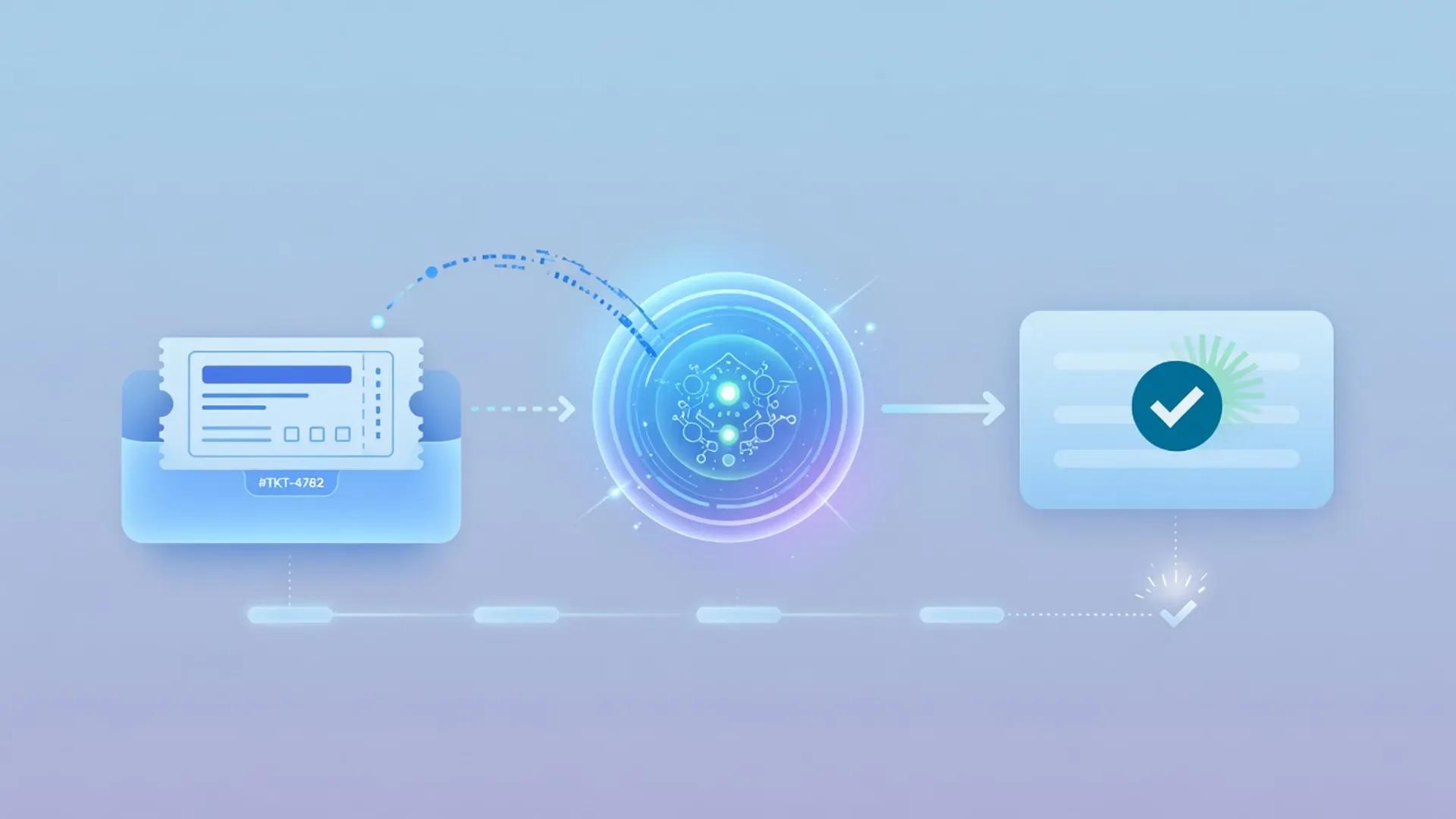
A practical, policy-first customer support AI workflow for triaging tickets, drafting replies, grounding agents in your knowledge base, and closing the loop with CRM context and automation, while keeping humans responsible for high-risk resolutions.

Founder Weekly Ops AI Workflow
A practical multi-step weekly operating rhythm for founders and solopreneurs who use AI to research, plan, ship content and outreach, and keep light CRM and automation hygiene—without inventing metrics or outsourcing judgment.

Best AI Automation Tools
A 2026 shortlist of AI automation and ops tools—Zapier, Make, n8n, HubSpot AI, Salesforce Einstein, and Notion AI—selected for moving work between systems, reducing copy-paste, and embedding assistance where operations already happen. Picked for practical fit, not paid placement, with no invented efficiency scores.

Best AI for Founders (July 2026)
A research-grounded shortlist of the AI tools I keep reaching for in July 2026 as a solo founder or early-stage team — general assistants, cited research, a living workspace, and visual automation — with primary-source pricing, model lineup, and the governance guardrails every founder should know before buying.

Best AI Tools for Sales Teams
An editorially curated shortlist of AI tools for B2B sales teams—CRM-native agents, general reasoning assistants, drafting copilots, and integration platforms—selected for practical pipeline fit, not paid placement or invented win-rate scores.
Catalog
Related products

Make
Editorially ResearchedVisual AI automation platform for building complex multi-app scenarios and AI agents on a transparent canvas.
Stands out · A visual AI automation canvas where next-gen Make AI Agents, MCP, and Make Grid observability ship together on every paid plan — purpose-built for complex, multi-app workflows.

n8n
Editorially ResearchedFair-code AI workflow automation for technical teams, with self-hosting, code steps, and an execution-based pricing model.
Stands out · Technical, self-hostable AI workflow automation with code-friendly nodes, MCP support, human-in-the-loop controls, and execution-based cloud economics—now embedded inside SAP Joule Studio.
Related
Compare this product
Next step
Explore Zapier AI
Visit the official site, or browse the full catalog for similar tools.