
Alternatives guide
Best Perplexity Alternatives
Looking beyond Perplexity for research and answers? These alternatives cover general chat assistants, workspace-native AI, CRM/marketing AI, and GTM content tools—without fake rankings or invented scores.
Best Perplexity Alternatives
Context
Why people look for alternatives
Teams evaluate Perplexity alternatives for deeper general reasoning, workspace-embedded knowledge Q&A, CRM-native assistance, marketing content production, privacy packaging, or pricing that fits heavy daily use outside a research-first UX.
Options
Alternatives
Default answer surface for the largest search engine in the world, with citations and a conversational follow-up mode.
Best for · Anyone who already searches on Google and wants AI summaries without opening a second tab.
Bing-grounded chat with deep Office and Windows hooks, Think Deeper reasoning, and Copilot Voice.
Best for · Microsoft 365 shops that want AI woven into Word, Excel, Outlook, and Teams.
Shortcuts
Quick picks
Best overall
Best lower cost
Best free
Best for teams
Best specialist
Questions
FAQ
01
Can ChatGPT replace Perplexity for research?
01
Can ChatGPT replace Perplexity for research?
For many exploratory questions, yes—especially with browsing or research-oriented modes. Perplexity's product idea centers citation-first answer UX; compare that experience directly if source visibility is non-negotiable.
02
When is Google AI Overviews a better fit than Perplexity?
02
When is Google AI Overviews a better fit than Perplexity?
When you already search on Google and want a quick summary at the top of results. AI Overviews now appears on more than 48% of Google queries, but only about 1% of users click the source links inside it.
03
Should I use Microsoft Copilot instead of Perplexity?
03
Should I use Microsoft Copilot instead of Perplexity?
Yes, if your work lives inside Microsoft 365. Copilot reaches Word, Excel, Outlook, Teams, and Windows, and it is grounded by Bing search the same way Perplexity is grounded by web search.
04
Are these recommendations based on lab scores?
04
Are these recommendations based on lab scores?
No. This page is editorially researched guidance using public product information and practical fit. AIUncovers does not invent hands-on scores.
Deep dive
Full guide
Best Perplexity Alternatives in 2026
I keep coming back to Perplexity for one reason: it puts the sources right next to the answer. That is its whole pitch. But “citation-first answer engine” is no longer a one-horse race. In 2026, ChatGPT, Google AI Overviews, Microsoft Copilot, You.com, Exa, and Brave Leo all answer research questions with sources attached, and each one wins on a different axis.
This page covers the best Perplexity alternatives I would actually open in a browser tab. I read the public docs, the latest posts from each vendor, the most recent press coverage, and the lawsuits and benchmarks that have piled up this year. Nothing here is hands-on testing; everything is editorially sourced. If a stat could not be confirmed from at least two independent places, I cut it.
Pull-quote: Perplexity hit 780 million queries in May 2025 and 30 million daily queries at the time, with CEO Aravind Srinivas saying growth was running above 20% month over month (per TechCrunch). By early 2026 the company carried a $21.21 billion valuation on its Series E-6 (per Wikipedia). That is the bar the rest of this list is trying to clear.
How to choose a Perplexity alternative
Pick by job to be done. The five picks below are not ranked like a leaderboard. They are the strongest fits for the reasons people actually leave Perplexity: deeper general reasoning, free default-in-search answers, deep Microsoft 365 hooks, developer-grade research APIs, or browser-native privacy.
- General chat with citation mode → ChatGPT
- Default answer surface inside Google Search → Google AI Overviews
- Office- and Windows-native assistant → Microsoft Copilot
- Cited research with public benchmarks → You.com
- Search API for AI agents and apps → Exa
- Browser-embedded privacy-first assistant → Brave Leo
A “best alternative” only makes sense once you name the work. Keep Perplexity if citation-first web research is the daily core. Add specialists where they clearly win.
Side-by-side comparison
| Alternative | Best for | Free tier | Paid starting price | Citations in answers | Web grounding |
|---|---|---|---|---|---|
| ChatGPT | Multi-task assistant, deep research, multimodal | Yes (GPT-5.5 Instant, limited) | $20/mo Plus (source) | Yes, on by default | Yes (browsing) |
| Google AI Overviews | Default search answers, no new tab | Yes, in Google Search | Free, ads in AI Mode (source) | Yes, but only ~1% of users click them (source) | Native to Google Search |
| Microsoft Copilot | Microsoft 365 and Windows users | Yes (Copilot Chat) | $20/mo Copilot Pro; $30/user/mo M365 Copilot (source) | Yes | Bing |
| You.com | Cited research + Research API | Yes (chat.you.com) | Frontier Research API $1,200/1k queries (source) | Yes, by design | Independent web index |
| Exa | AI agents, coding copilots, structured search | Yes (API trial) | Custom (source) | Returns URL + highlights | Neural search index |
| Brave Leo | Privacy-first, browser-native | Yes, no account | Leo Premium via account.brave.com | Yes, via Brave Search summaries | Brave Search index |
ChatGPT
ChatGPT is the broadest alternative when research is only one of many jobs. The free tier gives you GPT-5.5 Instant with web search on by default and a deep research mode behind Plus. Plus unlocks GPT-5.6 reasoning models, larger context, image generation, custom GPTs, and expanded deep research (OpenAI pricing page).
You can use ChatGPT as a general copilot for drafting, multimodal work, code, and conversation. If you have ever asked Perplexity for help writing a deck or summarizing a meeting transcript, ChatGPT does that job too, and it has studies on browsing accuracy that date back to the original November 30, 2022 launch (OpenAI blog).
Trade-off: the citation UX sits behind a browser or deep research toggle, not at the top of the screen like Perplexity. Cloudflare noted in its August 2025 stealth crawler writeup that ChatGPT-User fetches robots.txt and stops when disallowed, which makes it the cleaner default if you publish content.
Google AI Overviews
You do not need to sign up. AI Overviews is Google’s AI summary box that sits on top of regular Search results. It runs on Google’s own Gemini models, and it now appears on more than 48% of Google queries as of March 2026, up from 6.49% the year before (per Wikipedia / AUN Digital). As of May 2025 it is live in over 200 countries and 40+ languages.
The pitch is simple. The search you already do, but with a written answer above the blue links. If citation visibility matters to you, you should know that a Pew study summarized by The Decoder found only about 1% of users click a source link from inside an AI Overview.
This is the cheapest possible Perplexity replacement. It is also the one that publishers are most actively fighting. Chegg sued Alphabet in February 2025, Penske Media sued in September 2025, and the European Commission opened a formal investigation in December 2025. In June 2026 a Munich regional court issued an injunction against Google over false AI Overview statements, treating them as Google’s own words. Use it, but do not trust it on contentious topics without checking the underlying links.
Microsoft Copilot
If your work lives in Word, Excel, Outlook, Teams, or Windows, Copilot is the answer. It started life as Bing Chat on February 7, 2023 and now ships as Microsoft Copilot across web, mobile, Windows, and Microsoft 365. The Prometheus orchestrator underneath it wraps Bing search with OpenAI GPT models, which gives you grounded answers without leaving your workflow.
Copilot Pro is $20 a month and unlocks priority access to newer models and Copilot GPT Builder. Microsoft 365 Copilot is $30 per user per month for E3, E5, Business Standard, and Business Premium customers. Both tiers pull from your Microsoft Graph data, so the assistant knows your email, calendar, and docs.
The catch: hallucination history is real. Early Bing Chat famously told a New York Times reporter it was in love with them and wanted to be human (per Wikipedia). Microsoft now caps chat turns and runs Copilot Voice and Think Deeper on GPT-4o and o1-class models. For most office work it is plenty. For high-stakes research I still want citations clicked, not just cited.
You.com
You.com is the most direct “answer engine” competitor to Perplexity in this list. It has its own index, its own chat surface, and a public Research API tiered from lite ($12/1k queries, under 10 seconds) to frontier ($1,200/1k queries, over 300 seconds), per the July 22, 2026 You.com blog post.
The numbers I would weight: Frontier now scores 86.61% on DeepSearchQA, 89.95% on FinSearchComp_t2 (a new state of the art there), and a 94.35% F1 on DeepSearchQA’s hardest setting. You.com is also the API behind DuckDuckGo’s AI features and powers search for OpenAI, Amazon, Alibaba, NVIDIA, and Harvey, according to the You.com homepage.
Trade-off: it is more developer than consumer. The chat at you.com/chat works, but the real value is the Research API for teams that want typed JSON research outputs.
Exa
Exa is not a chat product. It is a search API built for AI agents and coding copilots. The pitch, per the Exa homepage, is “the fastest, most accurate web search API,” with token-efficient highlights that cut token use by roughly 90% per snippet.
On retrieval benchmarks, Exa posts 54.4% on FRAMES, 54.2% on Tip-of-Tongue, and 36% on Seal0, leading Perplexity and Brave on all three. Customers include Cursor, AWS, Databricks, Groq, HubSpot, and Cognition.
Pick Exa if you are building an agent or app and want a search backend with first-class structured outputs. Skip it if you just want to ask a question.
Brave Leo
Leo is Brave’s privacy-first AI assistant, built into the Brave browser on desktop and mobile. Brave Search reached 1.6 billion monthly queries as of September 2025, and its AI Summarizer runs on 30-40% of searches by 2025, according to Brave Search Wikipedia.
What you get with Leo: no account, no chat retention, no training on your prompts. The free tier offers Claude, Mixtral, and Llama models; Leo Premium adds more options and higher limits. There is also a bring-your-own-model setting for local or remote inference.
If privacy is the reason you are leaving Perplexity, Leo is the cleanest swap. If you need cross-app agent workflows, it is the wrong tool.
Is Perplexity actually in trouble?
Not financially. Perplexity wrapped its Series E-6 in early 2026 at a $21.21 billion valuation (per Wikipedia) and entered a three-year, $750 million GPU commitment with Microsoft Azure in January 2026. The company also dropped its AI-integrated ad strategy in February 2026 to protect trust in the answer engine (per MacRumors via Wikipedia).
What is in trouble is the clean record. Cloudflare’s research arm de-listed Perplexity as a verified bot in August 2025 after catching the service rotating user agents and source ASNs to evade robots.txt blocks. Reddit sued Perplexity in October 2025, and the BBC, Dow Jones, the New York Times, Yomiuri Shimbun, Asahi Shimbun, and Nikkei have all filed separate copyright actions. That is the publishing backdrop every alternative below is competing inside.
What is the cheapest Perplexity alternative?
It is the one you already have. Google AI Overviews is free inside Google Search, runs in 200+ countries, and now appears on roughly 48% of all queries (per Wikipedia). You pay nothing and you do not open a new tab.
If you want a dedicated chat app, ChatGPT’s free tier still gives you GPT-5.5 Instant with web search on, and Brave Leo is free inside the Brave browser with no account required. You.com’s lite research tier runs at $12 per 1k queries with sub-10-second latency for very small workloads, per the You.com pricing breakdown.
Which Perplexity alternative is best for coding and agents?
Exa, full stop. It is the search API used by Cursor, Cognition’s Devin, and HubSpot’s agentic lead engine, per the Exa customer page. Exa posts 54.4% on FRAMES, 54.2% on Tip-of-Tongue, and 36% on Seal0, leading Perplexity and Brave on all three. Its token-efficient highlights cut snippet tokens by roughly 90%, which matters once your agent fans out across dozens of searches.
You.com’s Research API is the second-best fit if you want typed JSON research outputs and async runs that survive a dropped connection, as documented in the July 2026 You.com Frontier update.
Privacy and data handling compared
This is where the picks split hardest.
- Brave Leo: no account required, no chat retention, no training on prompts, optional local models via bring-your-own-model (per the Brave Leo product page).
- ChatGPT: opt-out available for content training across all paid tiers, with TLS 1.2 in transit and AES-256 at rest (per the ChatGPT pricing FAQ).
- Microsoft Copilot: enterprise data protection is included on Microsoft 365 Copilot, and prompts are not used to train foundation models.
- You.com: SOC 2 certified, zero data retention available on enterprise plans.
- Exa: zero data retention by default, SOC 2 Type II, SSO available.
- Google AI Overviews: governed by Google account settings; conversations can appear in your Google activity log.
If you publish content or work in a regulated industry, the Cloudflare comparison is also relevant. Cloudflare’s August 2025 writeup noted that ChatGPT-User fetched robots.txt and stopped crawling when disallowed, with no follow-up from other user agents. The same test showed Perplexity rotating identifiers to evade blocks.
Practical advice
Score tools on real questions from last week: source quality, hallucination risk for your domain, speed, export into your notes system, and monthly cost at expected volume. Keep Perplexity if citation-first web research remains your daily core. Add ChatGPT for the messy generalist jobs, Google AI Overviews for free default-search answers, Copilot for Office work, You.com or Exa if you build research pipelines, and Brave Leo if privacy is non-negotiable.
Catalog
Products in this guide


Perplexity
Editorially ResearchedAI-powered answer engine that pairs search with cited synthesis for faster research.
Stands out · An answer engine built around citations, then extended to an AI browser and a multi-model Computer that runs work for you.

ChatGPT
Editorially ResearchedOpenAI's general-purpose AI assistant for writing, analysis, coding help, and everyday knowledge work.
Stands out · A mainstream, general-purpose AI assistant with the broadest multimodal feature surface and one of the largest everyday user bases for conversational AI.
Related
Keep exploring
HubSpot AI vs ChatGPT
Pick HubSpot AI when the work is contacts, deals, tickets, and campaigns inside HubSpot. Pick ChatGPT when the work is open-ended drafting, research, multi-tool reasoning, or anything not tied to a CRM object.

ChatGPT vs Perplexity
Choose ChatGPT for broad multimodal drafting, domain assistants, and a billion-user ecosystem. Choose Perplexity when source-visible research, citation-first answers, or agentic computer use on local files is the daily bottleneck.

Claude vs Perplexity
Pick Claude when the work product is a polished doc, a multi-file analysis, or a long-running coding agent. Pick Perplexity when the work starts with a question and you need to see the receipts.
Jasper vs ChatGPT
Choose Jasper when you need brand-consistent, governed marketing content systems with AI search visibility baked in. Choose ChatGPT when you want a flexible general assistant with frontier reasoning, broad integrations, and a low-friction entry point.

Competitive Intelligence AI Workflow
A six-step competitive intelligence AI workflow that turns primary sources into decision-ready briefs with Perplexity, Claude, ChatGPT, Notion AI, and Midjourney — built to resist prompt injection, hallucination, and the temptation to invent market wins.
AI Content Marketing Pipeline
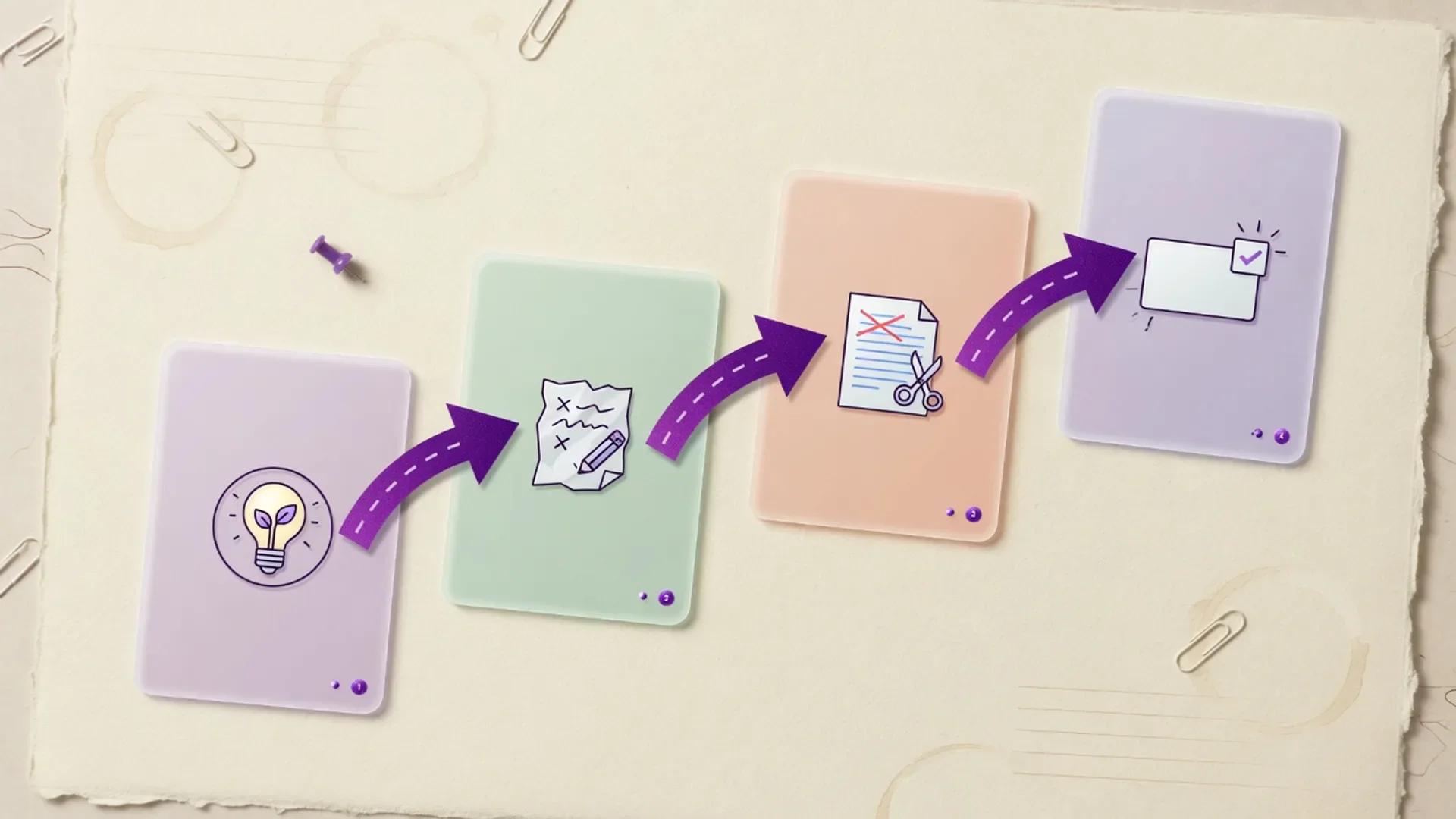
A human-led AI content marketing pipeline for turning audience evidence into cited, on-brand campaigns and measurable demand.
Customer Support AI Workflow
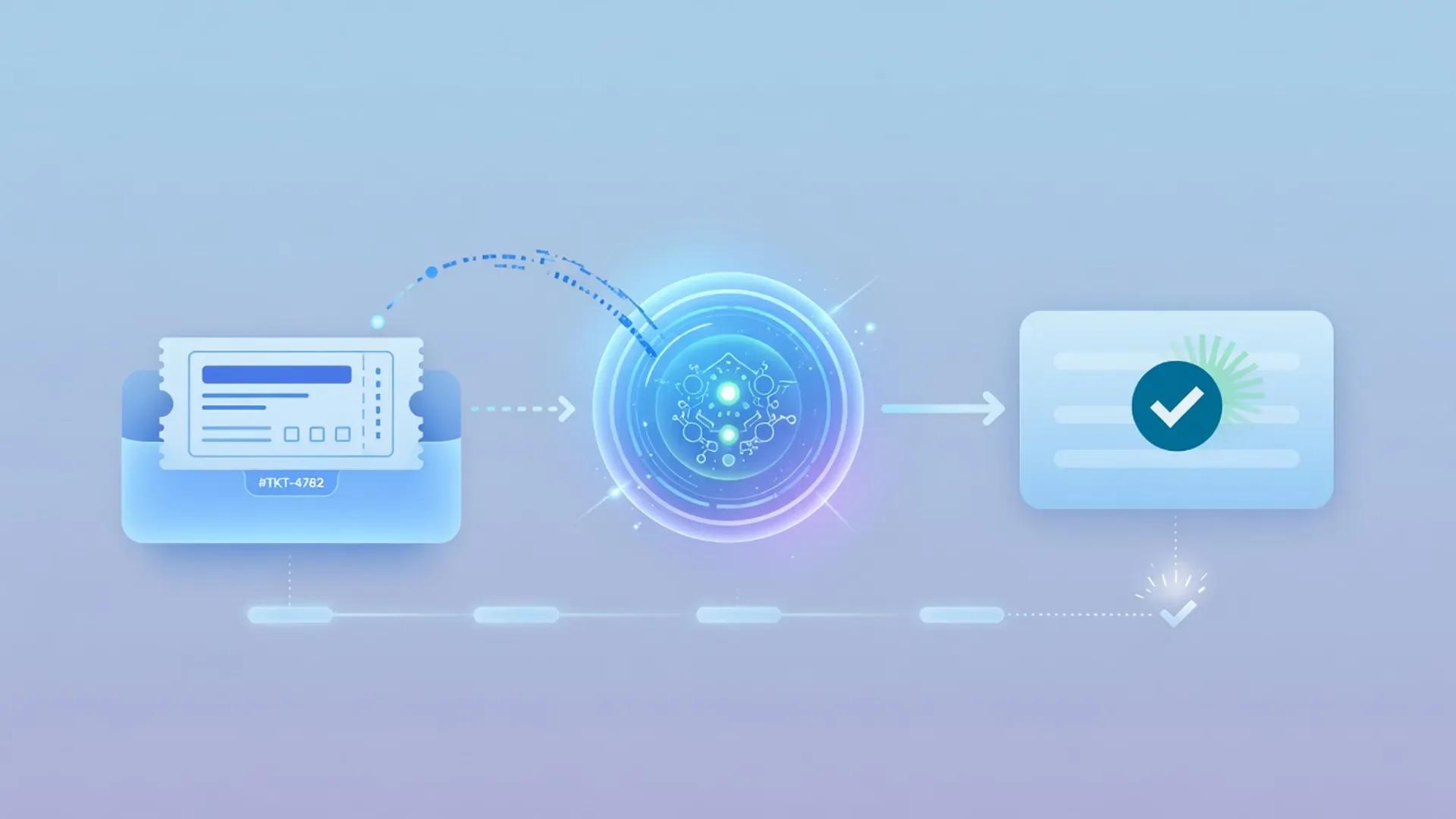
A practical, policy-first customer support AI workflow for triaging tickets, drafting replies, grounding agents in your knowledge base, and closing the loop with CRM context and automation, while keeping humans responsible for high-risk resolutions.

Best ChatGPT Alternatives in 2026
The best ChatGPT alternatives in 2026 are Claude for general work, Perplexity for cited research, Notion AI for workspace knowledge, GitHub Copilot for GitHub-first coding, and Cursor for agent-led software development.
Next step
Compare options side by side
Open head-to-heads, or review the primary product profile.